

Eight months into the Gaza ceasefire agreement that exists more on paper than on the ground, the past week saw the agreement’s terms continue to erode.
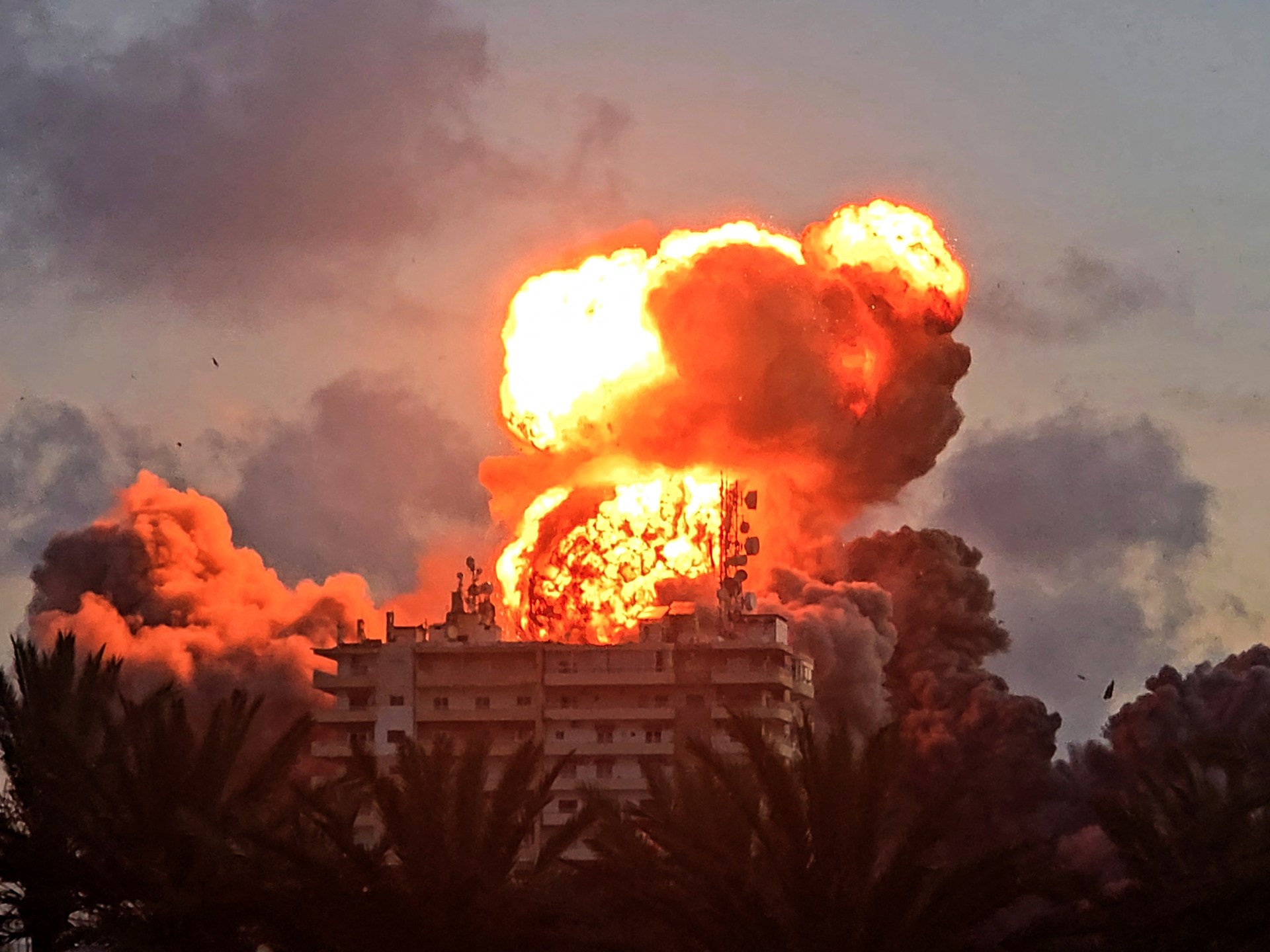
While Palestinian factions convened in Cairo, ostensibly to help move the agreement past its first phase, Israel pressed its hold on Gaza further – extending barriers of earth along an ever-widening “Yellow Line,” demolishing homes nightly, and killing displaced families in strikes that, according to Gaza’s Ministry of Health, pushed the post-ceasefire death toll past 970. Immediately following the latest exchange of fire with Iran on Sunday, Israel sealed Gaza’s last open crossings entirely, before announcing they would reopen on Tuesday.
- list 1 of 3Lebanon’s children face physical, psychological trauma amid Israel’s war
- list 2 of 3Why was Israel spared scrutiny for the 1967 USS Liberty attack?
- list 3 of 3‘Lives turned in a second’: Family of baby Sam, shot dead by Israel, grieve
end of list
And in the occupied West Bank, Israeli settler violence, land seizures and military raids continued to intensify – much of it, according to residents and rights monitors, with soldiers standing by or actively assisting.
Redrawing the map
Following Israeli Prime Minister Benjamin Netanyahu’s calls last week to extend Israel’s control to “first 70 percent [of Gaza]”, far beyond the lines agreed upon by the October ceasefire agreement, residents and local monitoring networks in Gaza reported Israeli forces extending mounds of earth known as berms along the “Yellow Line” – the line their troops are nominally meant to hold – westward across the Strip: digging land at al-Zaarba in southern Gaza’s Mawasi Rafah, levelling farmland and greenhouses south of Khan Younis, planting rows of yellow concrete markers near Ard al-Limon and in Rafah’s al-Bardawil neighbourhood, and burning farmland towards the Netzarim corridor.
Advertisement
Amid this push, residents and local activists also reported evacuation warnings used to stage demolitions across the Gaza Strip. Residents reported the army demolishing residential blocks east and northeast of Khan Younis almost nightly, in blasts heard across the central Strip.
Satellite imagery analysed by Israeli researcher Or Fialkov showed the line pushed further into Beit Lahia, Netzarim and southern Khan Younis – in the north, centre and south of Gaza – with preliminary assessments that Israel is roughly a month from controlling 70 percent of Gaza.
Widening deadly attacks in Gaza
As Israel expanded its control of the Strip, military raids repeatedly hit displaced civilians in tents and crowded apartment blocks. The Ministry of Health in Gaza said that 11 people were killed in Israeli attacks on Gaza City on June 4 .
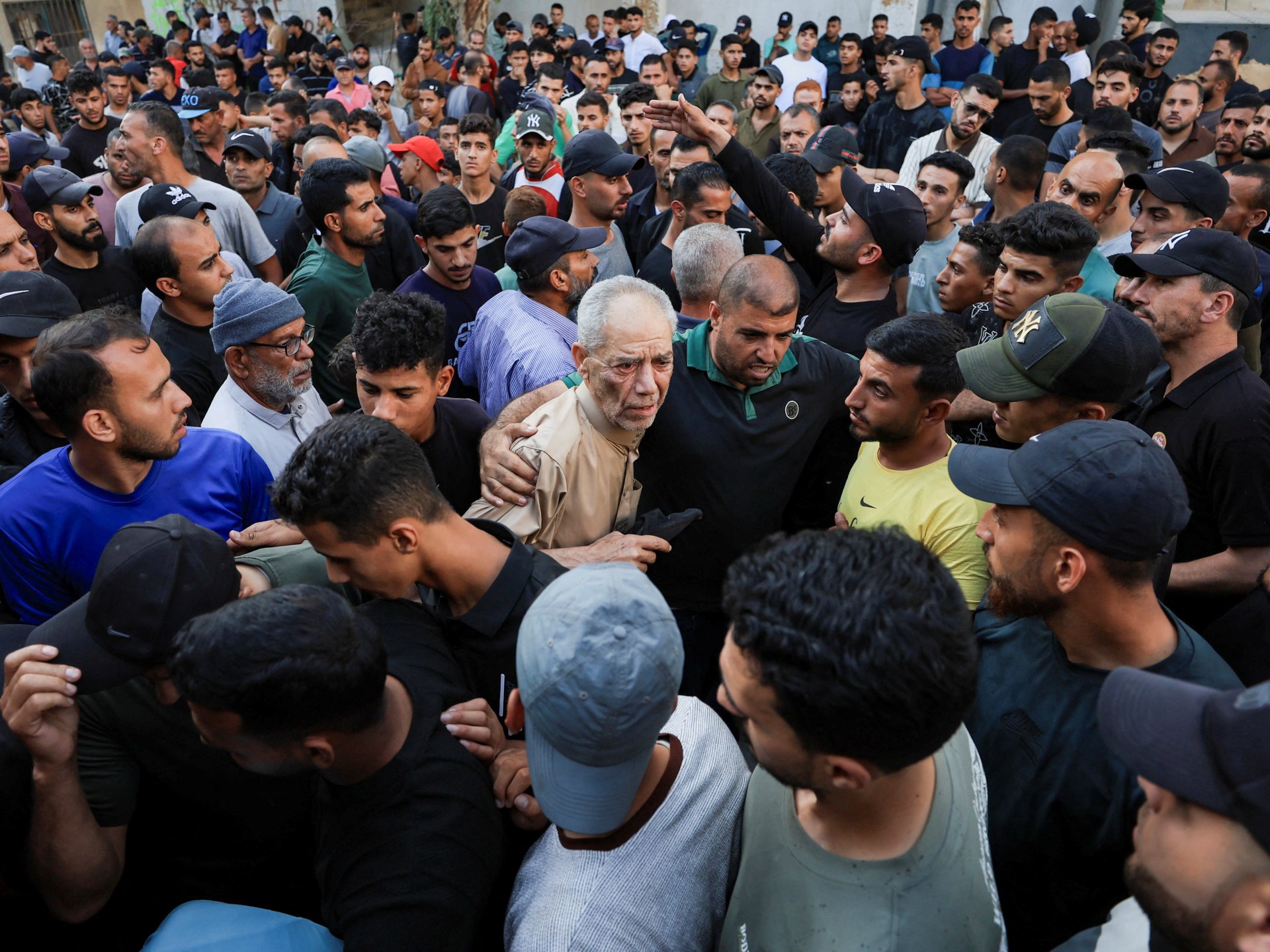
Five members of the Labad family were among those killed – Hassan Rabah Labad, his wife Manar, sons Mohammed and Tamim, and daughter Rahaf – leaving nine-year-old Hala the sole survivor, according to Gaza activist Hamza al-Masri. The Israeli army and domestic intelligence later told Israeli media the strikes had killed senior commanders of Hamas’s internal security apparatus, naming Hassan Labad as a deputy head.
The attack was one of a series of killings that continued throughout the week. On June 5 , according to Wafa, an armed helicopter struck a tent in Khan Younis, killing 18-year-old Bushra al-Barahmeh. According to Gaza’s Civil Defence, on June 6 , a drone hit a tent sheltering the displaced Qaddoum family near Gaza City’s passport office, killing eight – among them a father who had celebrated his first child’s birth the day before. Hours earlier, a strike on a family home in Khan Younis killed 26-year-old Muhannad Farwana on what was to have been his wedding day.
On June 7 , Israeli forces killed at least 13 Palestinians across al-Mawasi, Gaza City and Deir el-Balah, including five at a police post on al-Rashid Street and four – among them a woman and a child – near the al-Buraq School in Gaza City. In each case, the army said it had targeted fighters, but did not provide proof.
At sea, Israeli naval forces killed two fishermen off Deir el-Balah over the weekend and detained four others, according to Wafa reports. On June 8, Palestinian health officials told Reuters that six Palestinians had been killed by Israeli attacks, including a child.
Gaza’s Ministry of Health said May was the deadliest month of the year so far with 119 killed.
Advertisement
The killings unfolded against a collapsing humanitarian system, according to the United Nations. Israel had kept the northern Zikim Crossing closed since late May, funnelling all supplies through one congested crossing at Karem Abu Salem (Kerem Shalom). At the same time, funding cuts are forcing aid groups to scale back food and water supplies. The UN estimates that prices in Gaza are 235 percent above pre-October-2023 levels.
In a rare pushback, Israel’s Supreme Court struck down a blanket ban on Red Cross visits to more than 9,000 Palestinian prisoners, even as the lawyer for the detained Kamal Adwan Hospital director, Dr Hussam Abu Safiya, said his client had been moved to solitary confinement.
It was in this context that Palestinian factions arrived in Cairo, convening with Egyptian, Qatari and Turkish mediators to discuss the second phase of the ceasefire. Hamas signalled to Al Jazeera that it would hand governance to a technocratic national committee and keep weapons off Gaza’s streets, but would not surrender its arms outright, tying any decommissioning to an Israeli withdrawal; Israel and the Trump-appointed Board of Peace envoy Nickolay Mladenov have conditioned the next phase of the ceasefire on disarmament.
Settlers set West Bank on fire
A rash of videos and photos in recent days show settlers torching farmland and olive groves across the Ramallah and Nablus countryside – including in Burin, where residents said settlers lit four fires at once as soldiers blocked fire crews; in Madama, Jalud, as-Sawiya, Duma, Deir Sharaf, Shuqba and repeatedly in al-Mughayyir, where flames approached people’s homes.
Videos showed soldiers standing alongside settlers next to blazing fields. Such arson attacks are taking place during a time farmers typically harvest crops such as wheat and barley.
Local activists also described police accompanying settlers stealing crops at al-Farsh and Wad al-Rakhim. In Hawwara, footage showed a soldier joining settlers in beating two Palestinians during a mass settler attack that local medics said injured at least nine. In Jiljiliya, local activist networks reported three settlers – one masked, carrying a military-issued rifle – attacking workers on June 7 , striking Yousef Sumaya with the barrel before firing in the air, in the same village where a settler killed 16-year-old Yousef Kaabneh last month.
Al Jazeera has contacted authorities in Israel over the allegations of the involvement of soldiers in attacks but has yet to receive a response.
The inflamed West Bank also saw two young Palestinians, one of them an infant, killed by Israeli forces. On the morning of June 5 , the Palestinian Ministry of Health announced the killing of 18-year-old Haitham Ezzedine Omar Hamida during an overnight raid in Beitin; the Israeli military said a group of Palestinians had thrown petrol bombs at Israeli drivers.
Also that day near Hebron, troops opened fire on a family car, killing seven-month-old Sam Abu Haikal and wounding his parents. The army said soldiers had fired on a vehicle accelerating towards them – a reason offered in previous similar scenarios – and that an inquiry found the casualties were uninvolved civilians.
Advertisement
Alongside such violence came a succession of dispossession orders. Military orders this week placed more land under state control, while Israel’s Higher Planning Council approved an additional 2,162 settlement units near occupied East Jerusalem, Nablus and Hebron.
Meanwhile, UNRWA said the Tulkarem and Nur Shams camp closures, which have displaced more than 33,000 Palestinian refugees since early last year, had been extended until the end of July.
On the morning of June 7, Israeli police said a shooting near Kochav Yair in Israel killed one Israeli and wounded several. Two Palestinian suspects were killed and within hours Wafa reported that Israel tightened closures across Tulkarem and Qalqilya, neighbouring cities on the other side of Israel’s separation wall.
Related News
Iran and Israel bomb each other: Is the ceasefire over?
Could ex-ISIL fighters be used against Iran, as a Russian official claimed?

Voting ongoing in snap elections in Malta, governing party expected to win