
Haiti’s Carnival Continues Amid Crisis, Offering Relief in Uncertain Times
 15 February 2026
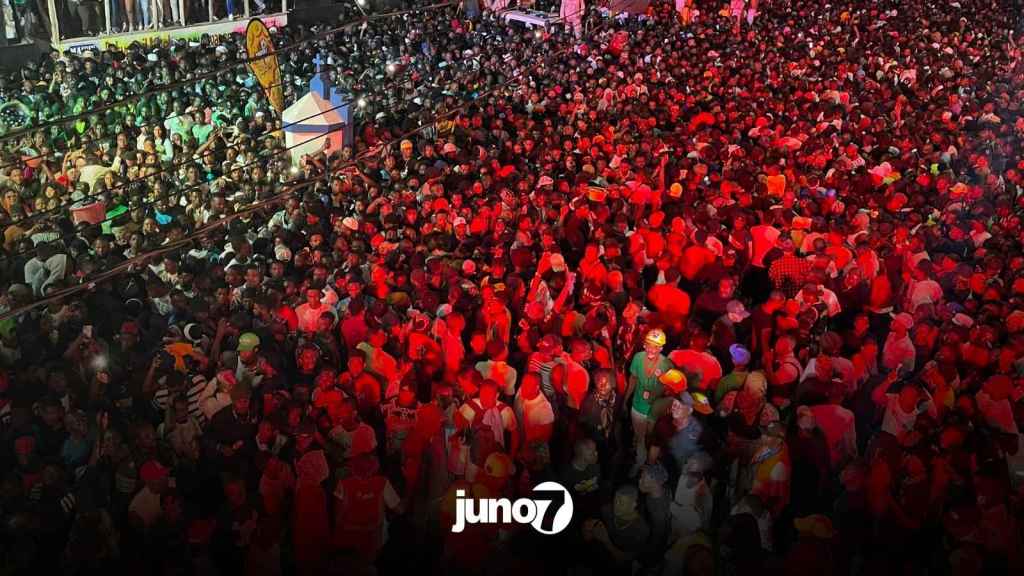

Despite ongoing political instability and worsening security conditions, carnival celebrations continue in parts of Haiti, drawing large crowds in municipalities such as Pétion-Ville and Delmas.
For several consecutive Sundays, music trucks, DJs, and traditional street bands have filled the streets with dancing and color, as thousands of residents gathered to participate in one of Haiti’s most deeply rooted cultural traditions.
The celebrations come at a time when Haiti remains gripped by armed gang violence, economic contraction, and institutional uncertainty. Large areas of the capital region are still affected by insecurity, and more than a million people are internally displaced. Yet in neighborhoods where authorities have been able to maintain relative order, carnival has reemerged as a symbol of resilience.
Observers reported significant gatherings near commercial areas in Pétion-Ville, with temporary stands being constructed ahead of the main carnival days. Similar scenes were noted in Delmas and other provincial cities including Jérémie, Les Cayes, Cap-Haïtien, and Jacmel.
For many Haitians, carnival is more than entertainment. It represents identity, continuity, and collective expression in the face of adversity. Supporters argue that public celebrations provide psychological relief and preserve cultural heritage during prolonged crisis.
However, the festivities have also sparked debate. Critics question whether large public gatherings are appropriate given the country’s fragile security environment and humanitarian challenges. Some point to the contrast between street celebrations and the broader national context marked by political transition and economic hardship.
In recent years, Haiti’s traditional nationally organized carnival has largely disappeared due to security concerns and fiscal constraints. Instead, local municipalities now organize decentralized celebrations, reflecting both budget limitations and the fragmentation of national governance structures.
Authorities have deployed police units during recent events to prevent disturbances, with reports of minor incidents being quickly contained.
The persistence of carnival in Haiti illustrates a complex reality: while the country struggles with governance, security, and humanitarian pressures, cultural life continues in pockets of relative stability. For many Haitians, these celebrations are not a denial of crisis, but rather a statement of endurance.
As Haiti navigates its uncertain political transition and ongoing security challenges, carnival remains a powerful reminder that even in fragile states, culture often outlasts crisis.
Related News
Paiements numériques en Haïti : ce que prévoit la BRH pour moderniser le système finan...

Conseil des ministres : Alfred Métellus révoqué, Didier Fils-Aimé nommé ministre des ...

Jeux d’hiver Milan-Cortina 2026 : Haïti représentée par deux athlètes