
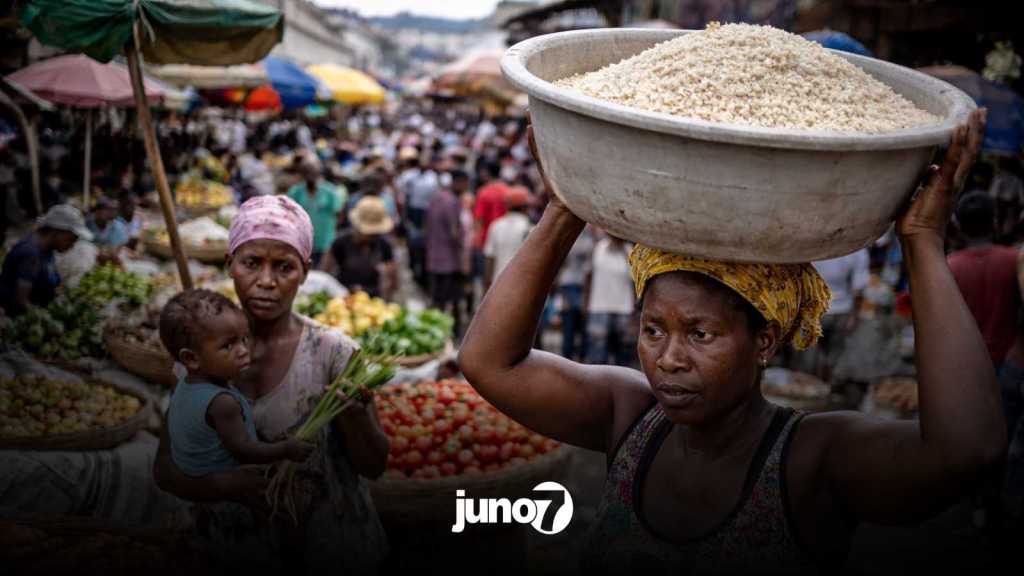

Food and housing prices continue to strain households despite a slight slowdown in December
Haiti’s annual inflation rate eased to 25% in December 2025, down from 28.3% in November, according to new data released by the Bank of the Republic of Haiti (BRH) and the Haitian Institute of Statistics (IHSI). This situation of Haiti inflation still affects many individuals.
The pace of price increases has slowed.
But prices are still rising, a fact closely linked to Haiti inflation in daily life.
For millions of Haitian households, the cost-of-living crisis remains far from over.
Food prices remain a major burden
Food and non-alcoholic beverages increased by 26.2% year-over-year, continuing to pressure family budgets in a country where food accounts for the largest share of household spending.
Housing, water, electricity, and gas costs rose by 40.5% annually — one of the steepest increases recorded. In particular, Haiti inflation makes these essentials far more difficult to afford.
For families living on fixed or informal incomes, these increases translate into difficult trade-offs between basic needs.
Slower inflation does not mean lower prices
Monthly inflation stood at 0.9% in December. While lower than previous months, it still represents price growth — not price declines.
Compared to neighboring Dominican Republic, where inflation remains below 1%, Haiti’s economic pressures remain significantly higher due to persistent Haiti inflation challenges.
What is driving the slowdown?
The central bank attributes the moderation to:
- Relative stability of the Haitian gourde against the U.S. dollar
- Improved availability of some food products
- Moderating international commodity prices
- Continued strength in private remittances
However, core inflation — which excludes volatile items — remains elevated at 24.1% annually, signaling persistent structural pressures.
Regional impact across the country
All major regions continue to record inflation above 22%, including the Port-au-Prince metropolitan area, where Haiti inflation rates are felt directly.
The slowdown is nationwide — but so is the cost burden.
Outlook for early 2026
Official projections suggest inflation could ease further:
- January 2026: 23.6%
- February: 22.4%
- March: 21.1%
Even at 21%, inflation would remain high by regional standards and continue to challenge economic stability. As a result, Haiti inflation will remain in focus for policymakers.
The bottom line
Inflation is slowing — but life in Haiti is still expensive. Thus, Haiti inflation continues to cause financial stress.
For households, the difference between 28% and 25% inflation is technical.
The financial strain remains real, highlighting ongoing Haiti inflation concerns for families.
Related News

Force internationale en Haïti : la France soutient la mission mais exclut l’envoi de tr...

Portrait de Krystel Châtelain, la jeune promesse du football féminin haïtien
Haïti – Taux de référence BRH: jeudi 19 février 2026