

Oil prices have risen sharply, and stocks have slid as United States and Israeli attacks on Iran and retaliatory strikes against Israeli and US military installations in the Middle East have disrupted the global energy supply chain.
West Texas intermediate, the light, sweet crude oil produced in the US, was selling at $72.79 a barrel early on Monday, up 8.6 percent from its trading price of about $67 on Friday, according to data from the CME Group.
- list 1 of 3After Iran’s salvo hit their skylines, will Gulf states enter the war?
- list 2 of 3‘We won’t negotiate with US’, says Iran amid continued US-Israeli attacks
- list 3 of 3Blasts shake Qatar, UAE, Kuwait as Iran’s retaliatory strikes continue
end of list
A barrel of Brent crude, the international standard, was trading at $79.41 per barrel early on Monday, according to FactSet, up 9 percent from its trading price of $72.87 on Friday, at the time a seven-month high.
Traders were betting the supply of oil from Iran and elsewhere in the Middle East would slow or grind to a halt as US President Donald Trump suggested that attacks would continue until US objectives were met.
Military strikes by the US and Israel on Iran showed no sign of lessening while Iran responded with missile barrages across the region, risking dragging its neighbours into the conflict.
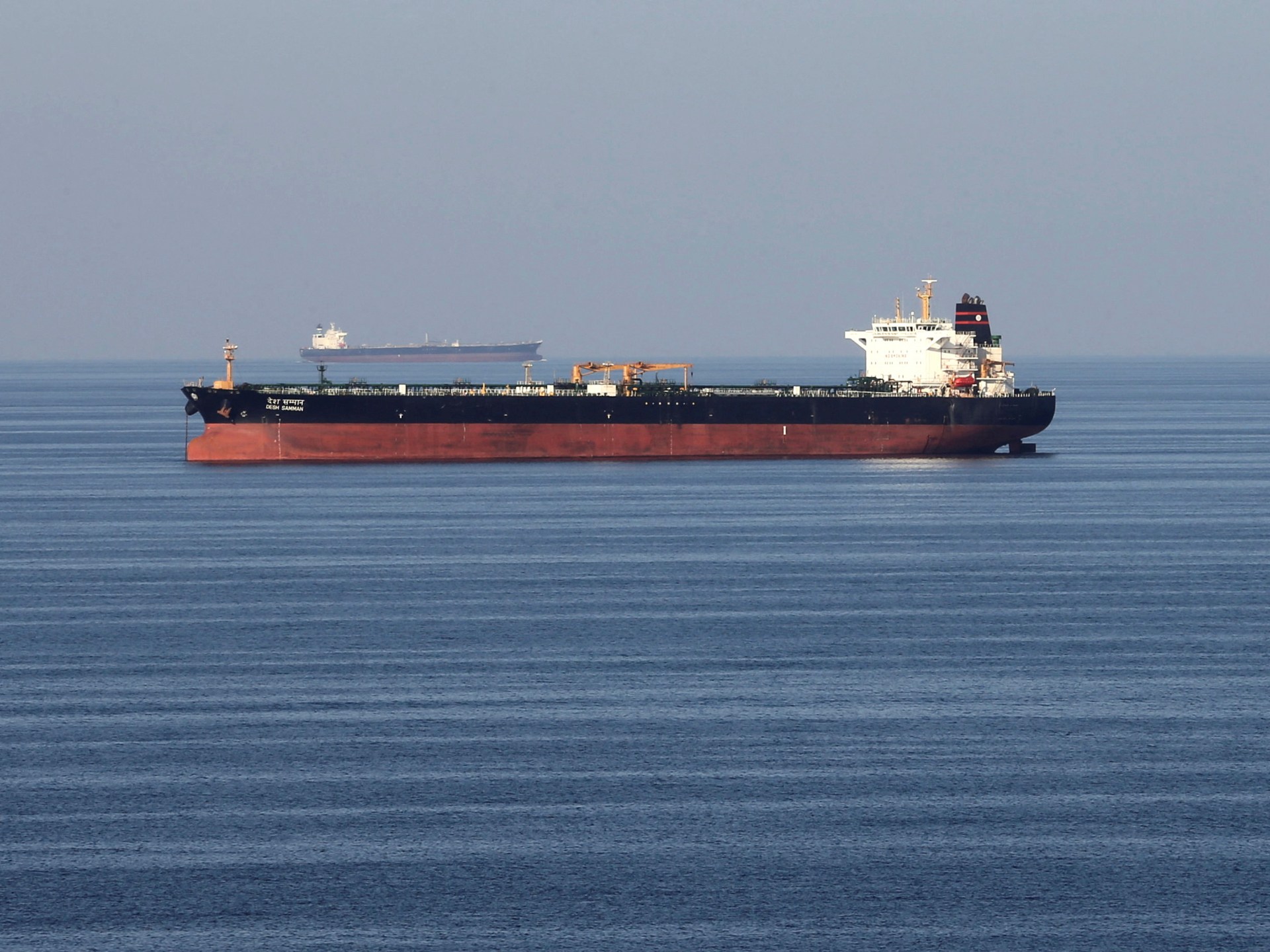
All eyes were on the Strait of Hormuz, through which about a fifth of the world’s seaborne oil trade flows. Tankers travelling through the strait, which is bordered in the north by Iran, carry oil and gas from Saudi Arabia, Kuwait, Iraq, Qatar, Bahrain, the United Arab Emirates and Iran.
While the vital waterway has not yet been blocked, marine tracking sites showed tankers piling up on either side of the strait, wary of attack or unable to get insurance for the voyage.
Advertisement
Two vessels travelling through the Strait of Hormuz were attacked on Sunday.
“The most immediate and tangible development affecting oil markets is the effective halt of traffic through the Strait of Hormuz, preventing 15 million barrels per day of crude oil from reaching markets,” Jorge Leon, head of geopolitical analysis at Rystad Energy, told the Reuters news agency.
“Unless de-escalation signals emerge swiftly, we expect a significant upward repricing of oil.”
Higher global energy prices mean consumers will pay more for petrol at the pump and have to shell out more for groceries and other goods at a time when many are already feeling the impacts of inflation.
Iran temporarily shut down parts of the strait in mid-February for what it said was a military drill. It led to a jump in oil prices by about 6 percent in the days that followed.
Against that backdrop, eight countries that are part of the OPEC+ oil cartel announced on Sunday that they would boost production. The Organization of the Petroleum Exporting Countries, in a meeting planned before the war began, said it would increase production by 206,000 barrels per day in April, which was more than analysts had been expecting. The countries boosting output are Saudi Arabia, Russia, Iraq, the UAE, Kuwait, Kazakhstan, Algeria and Oman.
Japan, which imports all its oil, saw its Nikkei stock index fall 1.3 percent on Monday. Blue-chip stocks in China, which gets much of its seaborne oil imports from the Middle East, were off just 0.1 percent. MSCI’s broadest index of Asia-Pacific shares outside Japan fell 1.2 percent.
Iran exports roughly 1.6 million barrels of oil a day, mostly to China, which may need to look elsewhere to meet its energy needs if Iran’s exports are disrupted, another factor that could increase energy prices.
However, China has ample strategic oil reserves and could boost imports from Russia, analysts said.
In the Middle East, the UAE and Kuwait temporarily closed their stock markets, citing “exceptional circumstances”.
In Europe, EURO STOXX 50 futures shed 1.3 percent and DAX futures slid 1.4 percent. FTSE futures fell 0.6 percent. On Wall Street, S&P 500 futures and Nasdaq futures both lost 0.8 percent.
The oil shock has rippled through currency markets with the dollar a main beneficiary. The US is a net energy exporter, and Treasury bonds are still considered a liquid haven in times of stress, leading to the euro falling 0.2 percent to $1.1787.
Related News

Jesse Jackson helped empower US Arabs and raise Palestinian cause
Israel carries out military incursion into Syria’s Quneitra in the Golan

Man killed after entering perimeter of Trump’s Mar-a-Lago resort