

South Africa is preparing to tighten security across the country ahead of the June 30 deadline set by anti-migrant protest groups for undocumented foreigners to leave.
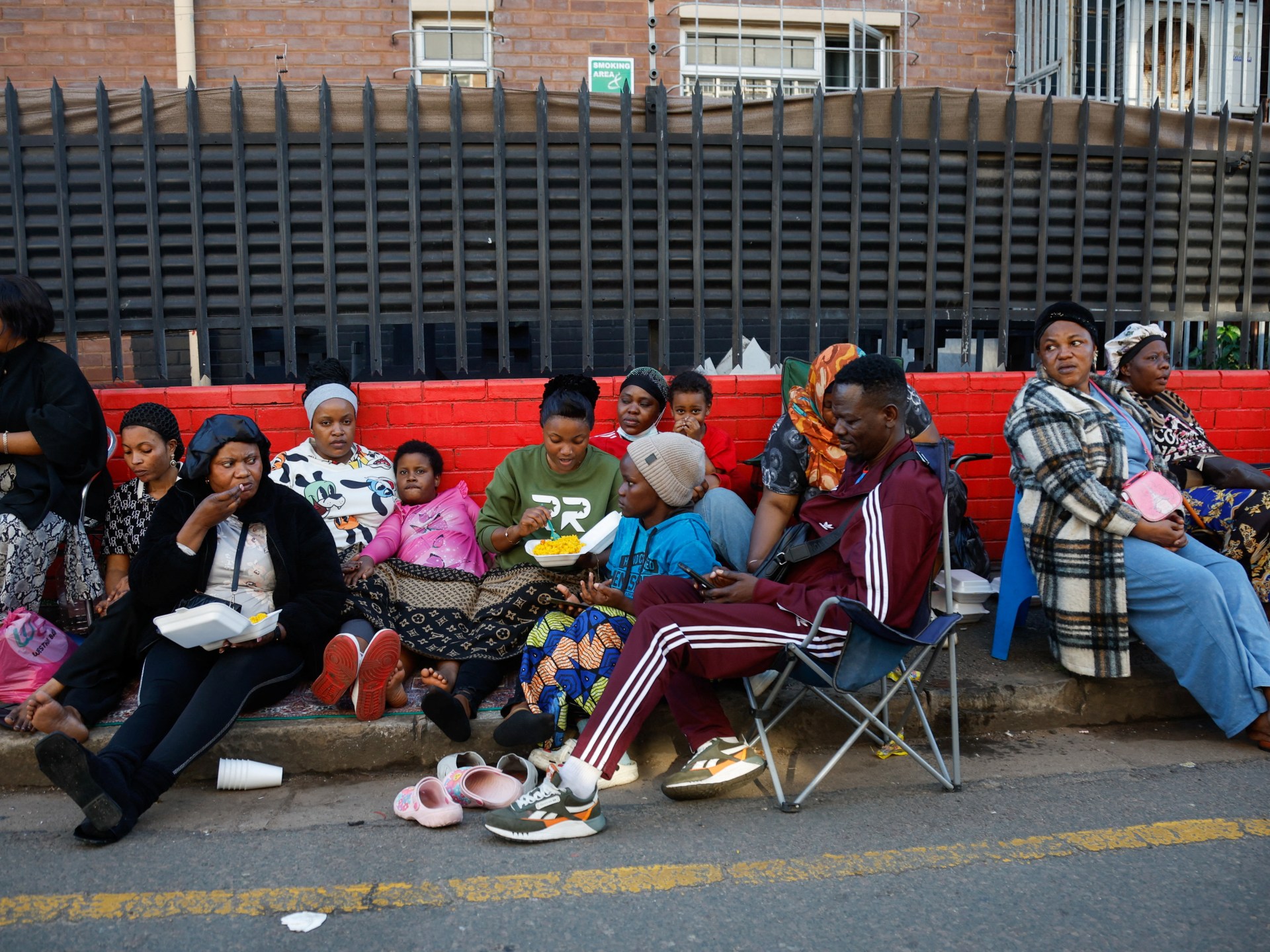
The country’s police minister said on Monday that the force is deploying extra security nationwide. South Africa has been plagued by weeks of xenophobic attacks that have left at least two people dead and seen many African countries sending aircraft to repatriate thousands of their nationals fleeing the violence.
- list 1 of 4Why are Nigeria-South Africa tensions rising amid xenophobic attacks?
- list 2 of 4Malawians and Nigerians flee South Africa amid xenophobic threats
- list 3 of 4Post-apartheid South Africa: 50 years after Soweto riots, what has changed?
- list 4 of 4South Africa’s immigration crackdown divides Johannesburg’s inner city
end of list
The small but organised protest groups have issued an ultimatum for undocumented migrants to exit the country or face consequences, a demand with no legal basis.
Acting Police Minister Firoz Cachalia said the police service “has elevated its operational readiness across all provinces, with comprehensive deployment plans in place to protect communities, critical infrastructure and key public spaces”.
He stressed the right to peaceful protest but warned: “Criminality, intimidation, violence, the destruction of property and any attempt to undermine public safety will not be tolerated”.
Defence Minister Angie Motshekga said that the military will secure strategic sites, such as airports, and stand ready to assist police if needed.
South Africa, a long-standing hub for migrant labour, faces unemployment above 30 percent and a history of anti-foreigner violence, fuelled by allegations that migrants drive crime and steal jobs.
Political parties, such as the Patriotic Alliance, ActionSA and uMkhonto we Sizwe, increasingly frame migrants as competitors for jobs and public services.
Advertisement
Mpho Makhubela, a member of the Consortium for Refugees and Migrants in South Africa (CoRMSA) and an activist in KAAX, said vigilante groups are increasing in response to wider social frustration.
“Vigilante groups feed off the country’s frustrations over unemployment, socioeconomic decline and the lack of effort to address inequality gaps,” he told Al Jazeera.
Sixty two people were killed in anti-migrant riots in 2008, with more violence in 2015 and 2016. In 2019, armed mobs attacked foreign-owned businesses around Johannesburg, leaving at least 12 people dead.
The latest tensions come ahead of local government elections scheduled for November 4 . During voter registration at the weekend, gunmen shot dead four people linked with political parties.
Two of them were affiliated with the opposition Umkhonto we Sizwe (MK) party, headed by Jacob Zuma, South Africa’s president between 2009 and 2018.
The third shooting victim was a Democratic Alliance ward candidate in the Western Cape, while an African National Congress ward councillor was killed in the Eastern Cape.