

A delegation from Oman has arrived in Iran to discuss options for managing shipping traffic in the Strait of Hormuz, as the United States and Iran continue attacks.
The Omani diplomats arrived in Tehran late on Friday for talks with Iranian officials on mechanisms governing navigation through the strait, Iran’s state-run IRNA news agency reported.
- list 1 of 4UN envoy for Yemen ‘alarmed’ by Houthis’ Red Sea attacks, calls for talks
- list 2 of 4As oil soars, experts watch Red Sea tankers for clarity on Houthi blockade
- list 3 of 4Tehran slams Trump’s threat to use frozen Iranian assets as ‘incendiary’
- list 4 of 4US attacks Iran as Houthis allow Chinese ships to pass: What’s the latest?
end of list
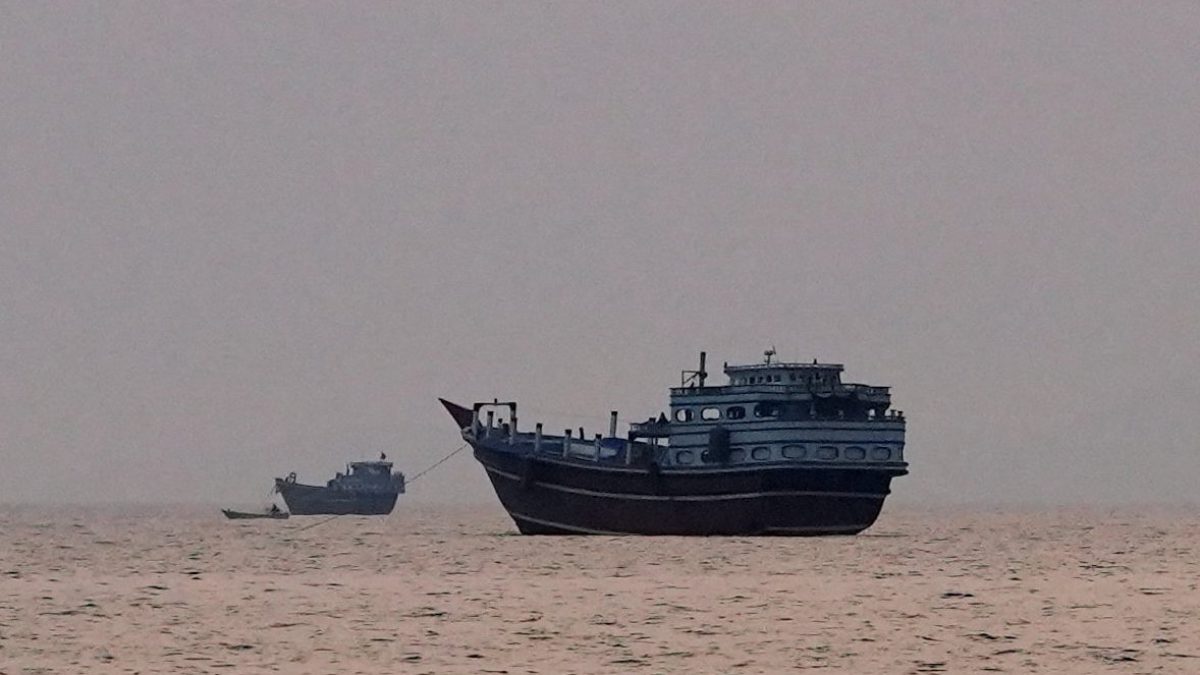
Control over the strait has become the main focus of hostilities between the US and Iran, with the global economy exposed to rising energy prices due to the closure of the strategically important waterway, through which around 20 percent of oil and gas exports were shipped before the outbreak of the conflict.
IRNA said the delegation’s visit was part of ongoing consultations between Iran and Oman. Iran’s Foreign Ministry said that Foreign Minister Abbas Araghchi held a phone call with his Omani counterpart, Badr Albusaidi.
No details regarding the ideas being discussed were released. However, Tehran has maintained throughout the war that it is open to managing the critical waterway in coordination with Oman.
The US and Gulf states have rejected such a setup. However, Oman holds a strategic position at the entrance and exit to the strait and has historically played a mediating role in regional disputes, maintaining diplomatic ties with both Gulf states and Iran.
“Vital waterways, including the Strait of Hormuz, must remain open and accessible for navigation, free from any measures that would impede freedom of navigation and international trade flows,” Albusaidi posted on X.
Meanwhile, the US and Iran exchanged air strikes for the 14th day in a row, despite efforts to rekindle diplomacy aimed at persuading both to implement the Memorandum of Understanding. It achieved a pause in fighting last month but collapsed, largely due to differences over what was agreed regarding freedom of navigation in the strait.
Advertisement
The crisis has only deepened since Houthi rebels in Yemen declared a naval blockade against Saudi Arabia on Monday, opening a new front.
On Friday, Iran’s military claimed further attacks on US bases across the region, which have been the main target for its fire during the hostilities.
Attacks were reported on bases in Kuwait, Bahrain and Jordan, while a drone crash near Iraq’s Erbil International Airport forced the temporary suspension of flights.
Iran’s Islamic Revolutionary Guard Corps (IRGC) said they targeted US tech giant Amazon’s data centre in Bahrain for “providing intelligence support for the American child-killing army”.
The Houthis have also reportedly continued to target Saudi tankers in the Strait of Hormuz, as well as the strategic Bab al-Mandeb Strait. However, a Houthi spokesman denied the group has shut down the waterway.
The US Central Command said it had concluded air strikes on Iran. Iranian media reported four people were injured in blasts in several cities, including Khorramabad, Jask, Ahvaz and Bandar Abbas, as well as Qeshm Island.
Iran’s Health Ministry said at least 55 people have been killed in recent US attacks and nearly 650 injured.
Related News

VIDEO: Argentina arrive in New Jersey ahead of Spain final on Sunday
Palestine weekly: Israel accelerates land grabs in Gaza, West Bank

Mistrial declared in federal arson case related to California wildfires