
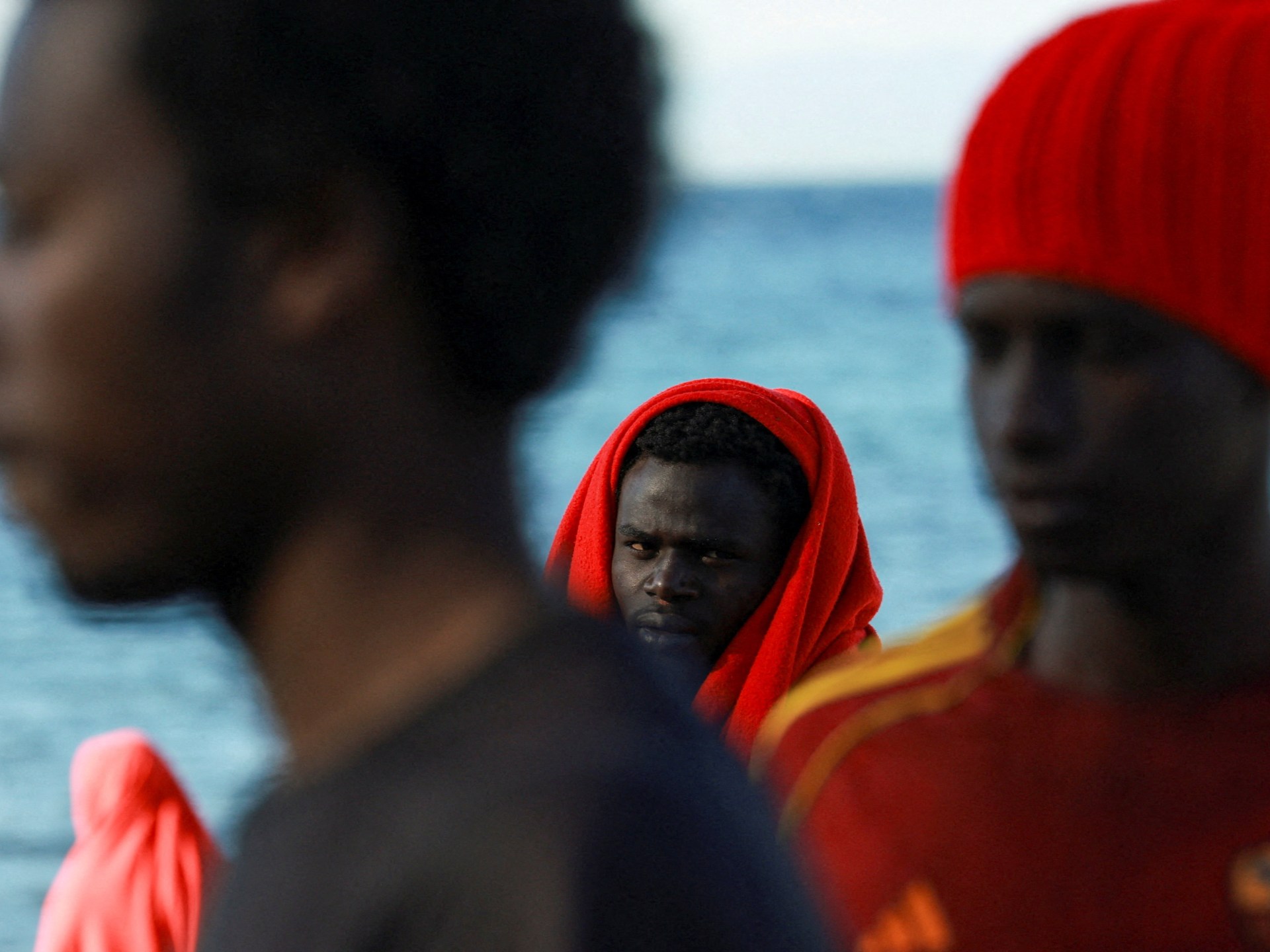

Ceuta, Spain – On a stretch of beach, crowned by vacant holiday villas, a few hundred people from African countries bask in the sun.
At first glance, this is a typical holiday scene. But look closer: Some are engaged in laundry, thrashing their clothes against the rocks. A group is playing football, others are asleep. A few are bent over in prayer.
- list 1 of 3Families search for loved ones after deadly Ceuta crossings
- list 2 of 3Why does Spain have ‘enclaves’ in North Africa?
- list 3 of 3How Israel and the European far right tried to exploit Ceuta
end of list
They live here now, with little access to food, water or hygiene – a pitiful postscript to last week’s migrant surge from Morocco into Spain’s tiny enclave of Ceuta in North Africa.
Tens of thousands of Moroccans were sent back under special arrangements between the two countries – something the Spanish government is eager to press home to its European Union neighbours, many of whom are pointing the finger.
The majority were veteran opportunists who are likely to try again. Others, like the young men on the beach, are from countries such as Sudan, Somalia, Senegal, Mali and Egypt, spilling out of an already crammed migrant reception centre. They cannot be returned in a regular way, and none would go voluntarily.
They have complex stories to tell in their longing for asylum, some escaping war, others fleeing poverty. One Somali man told me that if it was his destiny to die here, then so be it – at least he tried.
Two others from Senegal were happy to admit they are economic migrants. “We are able-bodied, we have a lot to contribute,” said one of them, Omar. “We have come to work, not to beg.”
It was this latter point that prompted a plan by Spain’s Socialist-led government under Pedro Sanchez to allow regularisation for up to one million undocumented migrants this year, helping address labour shortages caused by an ageing population and a shrinking workforce.
Advertisement
An act of progressive pragmatism that was at odds with many EU governments that called it irresponsible and unforgivable.
To Spain’s indignation, the events at Ceuta have been seized upon, especially by the populist right, as the inevitable consequence of left-wing temerity, even if other factors were at play – social media, smuggling gangs, a great many migrant accounts of Moroccan border guards waving them through.
The full facts have yet to be established, but this does not seem to matter much to the men on this beach.
Together, they have arrived at a European shore, albeit one looking out at an African sea. Some will have noticed its name, Playa del Trampolin – trampoline beach. A jumping-off point? That will feed their hope.