Bolivia’s ex-leader Morales reappears in stronghold after 7-week absence
 20 February 2026
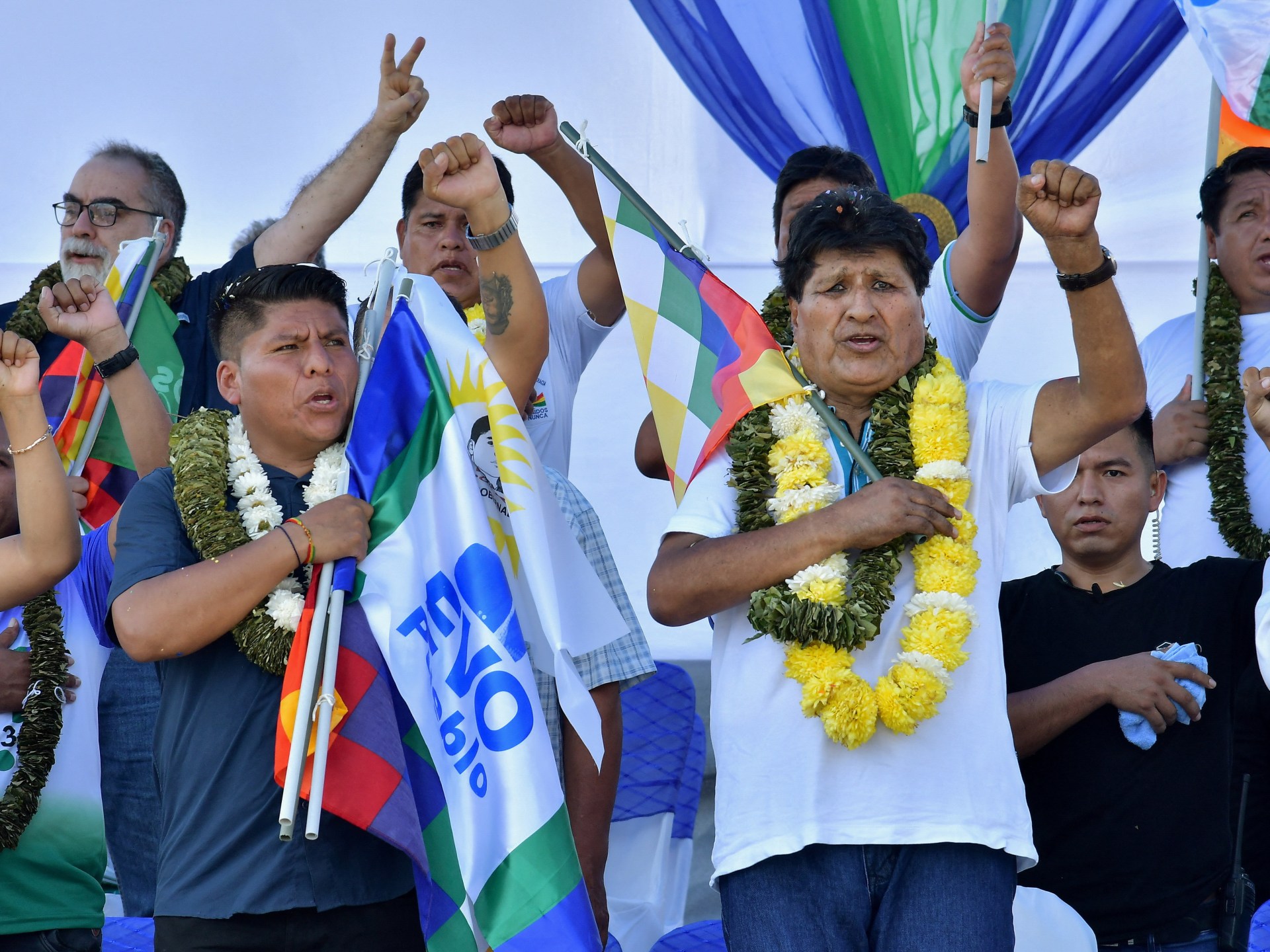

Evo Morales, Bolivia’s former long-serving socialist leader, has reappeared in his political stronghold in the country’s central Chapare region after almost seven weeks of unexplained absence.
His public appearance on Thursday in the town of Chimore ends rife speculation he had fled the country in the wake of the United States abduction of his ally, Venezuelan President Nicolas Maduro, in January.
- list 1 of 3Trump-Petro meeting: Just how icy are US-Colombia relations?
- list 2 of 3From blackouts to food shortages: How US blockade is crippling life in Cuba
- list 3 of 3Venezuela grants amnesty that could release hundreds of political detainees
end of list
The media outlet of Morales’ coca-growing union, Radio Kawsachun Coca, released footage of the former leader smiling in dark sunglasses as he arrived via tractor at a stadium to address his supporters.
Morales endorsed candidates for next month’s regional elections and pointedly accused the US under President Donald Trump of wanting “to eliminate every left-wing party in Latin America”.
Morales, Bolivia’s first Indigenous president, serving from 2006 until his fraught 2019 ouster and subsequent self-exile, explained that he had come down with chikungunya, a mosquito-borne ailment with no treatment that causes fever and severe joint pain, and suffered complications that “caught me by surprise”.
He dismissed rumours that he would try to flee the country, pledging to remain in Bolivia despite the threat of arrest under conservative President Rodrigo Paz, whose election last October ended nearly two decades of rule by Morales’s Movement Toward Socialism party.
The former president has spent the past year evading an arrest warrant on charges of human trafficking, which he has denied.
In December, a month after Paz was inaugurated, Bolivian authorities arrested former President Luis Arce as part of a corruption investigation.
Advertisement
The accusations centre on Arce’s time as economy minister under Morales, when authorities say he oversaw the diversion of approximately $700m from a state fund created to channel natural gas revenues into development projects for Indigenous peoples and peasant farmers.
Since taking office, Paz’s revival of diplomatic ties with Washington and recent efforts to bring back the US Drug Enforcement Administration – some 17 years after Morales expelled American anti-drug agents from the country – have also rattled the coca-growing region that serves as Morales’s bastion of support.
Related News
Why did Israel jail journalist who witnessed Shireen Abu-Akleh’s killing?
Thai election sees old order restored as political dynasties weigh on vote
Cyclone Gezani kills four in Mozambique as Madagascar assesses damage