
Ethiopia’s PM insists on access to Red Sea despite regional conflict threat
 05 October 2026
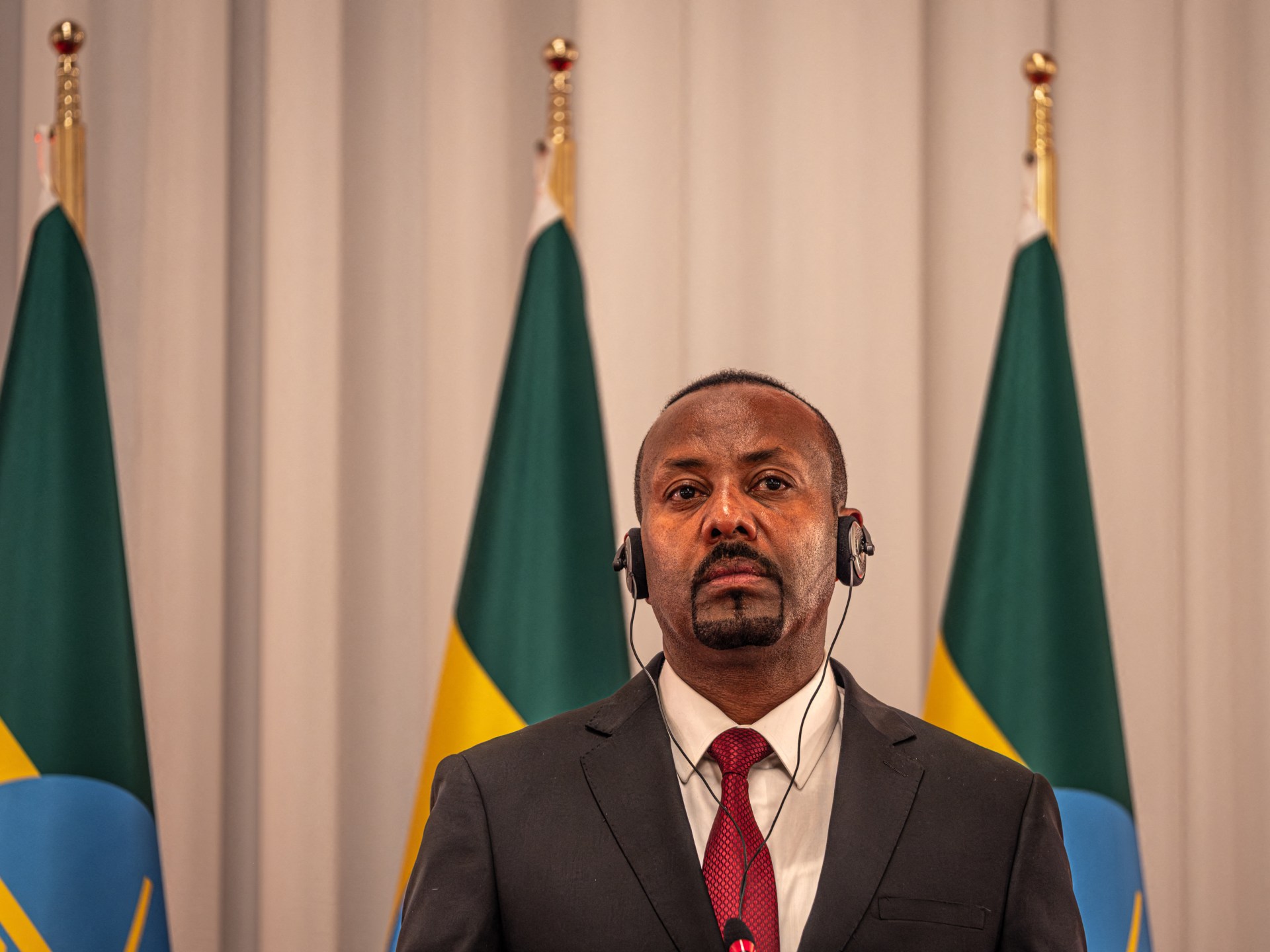

Ethiopia’s Prime Minister Abiy Ahmed has insisted that his landlocked country must have access to the Red Sea, despite a conflict in the north of the country that risks escalating into a regional conflict.
Abiy made the demand as he was sworn in for another five-year term in power on Monday. His call came as Ethiopian forces were pushing back opposition forces in the northern Tigray region, which are backed by Eritrea, whose independence in 1993 blocked Addis Ababa’s access to the coast.
- list 1 of 4Ethiopian gov’t-aligned group claims close to full control of Tigray region
- list 2 of 4Ethiopian gov’t forces advance in Tigray as rebels retreat: What to know
- list 3 of 4Somali president: Ethiopia can access our port, but must negotiate
- list 4 of 4Ethiopia’s forces retake Mekelle amid renewed Tigray fighting
end of list
Repeating previous assertions, Abiy said in a speech in Parliament that the country would work to secure a port on the Red Sea, saying that access was critical to Ethiopia’s “civilisation”.
“Based on the principle of give and take, we will work diligently to ensure that Ethiopia has an outlet to the sea,” he said.
![Members of the Ethiopian pro-government Tigray Peace Force (TPF) ride in a pickup truck while Ethiopian federal and allied forces enter the Tigray capital of Mekelle, October 4, 2026 [AFP]](https://www.aljazeera.com/wp-content/uploads/2026/10/afp_6ac4015e5e71-1791230302.jpg?w=770&resize=770%2C513&quality=80)
Abiy’s new term and call for Red Sea access come amid worsening relations between Ethiopia and its neighbours.
Ethiopia has accused Eritrea, Egypt and Sudan of supporting opposition forces in the northern Tigray region, following a resurgence of fighting against Abiy’s government.
Lower-level clashes between the federal military and Tigray People’s Liberation Front (TPLF) began in August, violating a three-year-old peace deal that ended a devastating two-year war between the parties.
Fighting intensified following the formation of the Ethiopian Peoples’ Forces Alliance for Survival – a coalition of seven armed movements, including the TPLF, which has committed itself to removing Abiy’s government.
Advertisement
In an exclusive interview with Al Jazeera, Somali President Hassan Sheikh Mohamud said Somalia did not object to Ethiopia gaining access to the Red Sea through Somali territory but added that the two countries would need to officially negotiate.
Four of the five countries bordering the Red Sea – Egypt, Eritrea, Sudan and Somalia – met on Sunday in Egypt’s New Alamein, claiming that oversight of the coastline was reserved for bordering states.
The following day, Ethiopia’s Foreign Ministry said discussions over the Red Sea must account for the country’s “legitimate interests and enduring connection” to the body of water.
Related News

Palestinians, US journalist attacked in West Bank pogrom: What we know

Anthropic AI model submits false homicide tip to Philadelphia police
As President Paul Biya returns to Cameroon, can he still rule?