


The Kremlin has said the United States-Israeli war on Iran had prompted “a significant increase in demand” for Russian energy products, a day after the US Treasury issued a 30-day waiver allowing India to buy Russian oil currently stuck at sea.
The conflict, which entered its seventh day on Friday, has left the Strait of Hormuz, a critical shipping passage, all but shut, with countries around the world scrambling as they are cut off from a fifth of global oil and liquefied natural gas supplies.
- list 1 of 4Oil on Fire: War impacts global energy markets
- list 2 of 4Which oil and gas facilities in the Gulf have been attacked?
- list 3 of 4UAE oil depot fire still raging day after drone sparks blaze
- list 4 of 4How will the Middle East conflict affect global energy prices?
end of list
Russia, mired in its own war launched in Ukraine more than four years ago, may yet stealthily benefit from this new sprawling war in the Middle East.
Kremlin spokesman Dmitry Peskov told reporters on Friday that Russia has been and remains a reliable supplier of oil and gas, via pipelines and in liquefied form.
“We are seeing a significant increase in demand for Russian energy resources in connection with the war in Iran. Russia has been and remains a reliable supplier of both oil and gas – including pipeline gas and liquefied natural gas,” Peskov told reporters.
“It also remains capable of guaranteeing the continuity of all deliveries for which contracts have been concluded,” he added.
Peskov declined to disclose possible volumes of Russian oil supplies to India following Washington’s waiver, which followed months of US pressure and the imposition of severe tariffs on the South Asian nation not to buy Russian oil.
Also on Friday, International Energy Agency Executive Director Fatih Birol suggested that looking to Russia for gas supplies will be economically and politically wrong.
Advertisement
“The current crisis in the Middle East has led to questions in some quarters about whether to go back to Russia or not,” Birol told reporters following a meeting of European Commission President Ursula von der Leyen and European Union commissioners on global energy markets.
The EU is under mounting pressure from industries and governments to step in to try to curb high energy prices. Von der Leyen has promised to draw up options for EU leaders to consider at a summit later this month.
“One of Europe’s historical mistakes was the overreliance of its energy sources on one single country, Russia,” the IEA chief said.
On oil, Birol claimed there was “logistical disruption” from the war, but there was “plenty of oil” in the global market.
Meanwhile, Qatar’s Energy Minister Saad al-Kaabi told The Financial Times newspaper in an interview published on Friday that he anticipates all Gulf energy producers to shut down exports within weeks if the Iran conflict continues and drives oil to $150 a barrel.
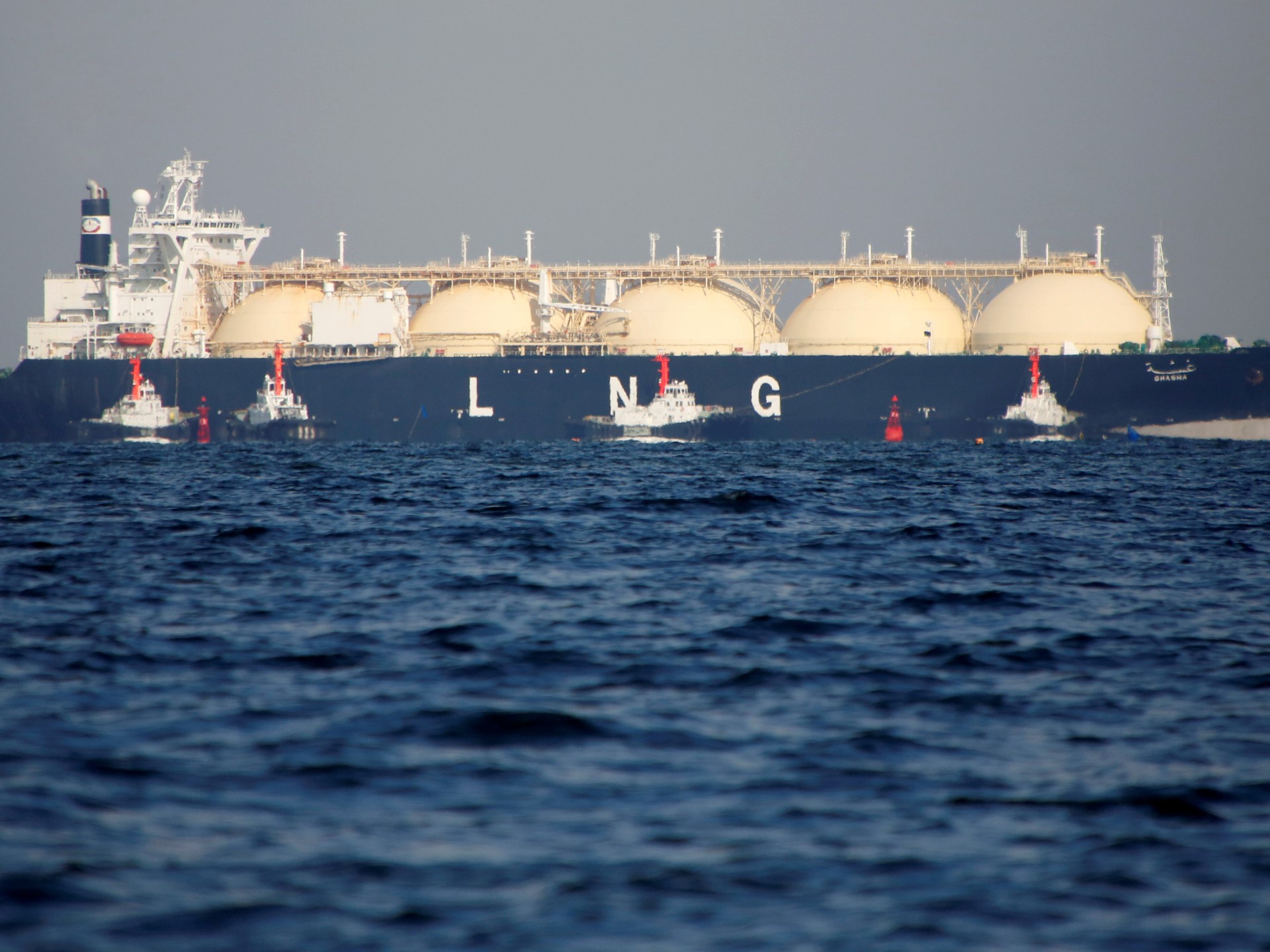
Qatar halted its production of liquefied natural gas on Monday, as Iran continued to strike Gulf countries in retaliation for Israeli and US attacks. The country’s LNG production is equivalent to about 20 percent of global supply and plays a key role in balancing Asian and European markets’ demand for the fuel.
“Everybody that has not called for force majeure we expect will do so in the next few days that this continues. All exporters in the Gulf region will have to call force majeure,” al-Kaabi told the FT. “If this war continues for a few weeks, GDP growth around the world will be impacted,” he said.
“Everybody’s energy price is going to go higher. There will be shortages of some products and there will be a chain reaction of factories that cannot supply,” Kaabi said.
Kaabi said even if the war ended immediately, it would take Qatar “weeks to months” to return to a normal cycle of deliveries.
He forecast that crude prices could hit $150 a barrel in two to three weeks if ships and tankers were unable to pass through the Strait of Hormuz. Kaabi also anticipates gas prices to rise to $40 per million British thermal units.
On Friday, benchmark US crude surged 4.1 percent to $84.36 per barrel. Brent crude, the international standard, gained 1.7 percent to $87 per barrel. It was trading near its highest level since April 2024.
Related News

Iran holds mass funeral for girls, staff killed in US-Israel school attack
Are the US and Iran moving closer to war?

Gunmen on motorcycles kill at least 50 in northwest Nigeria: Report