
Norway wealth fund urged to ease nuclear arms ban after Gaza investment row
 16 October 2026
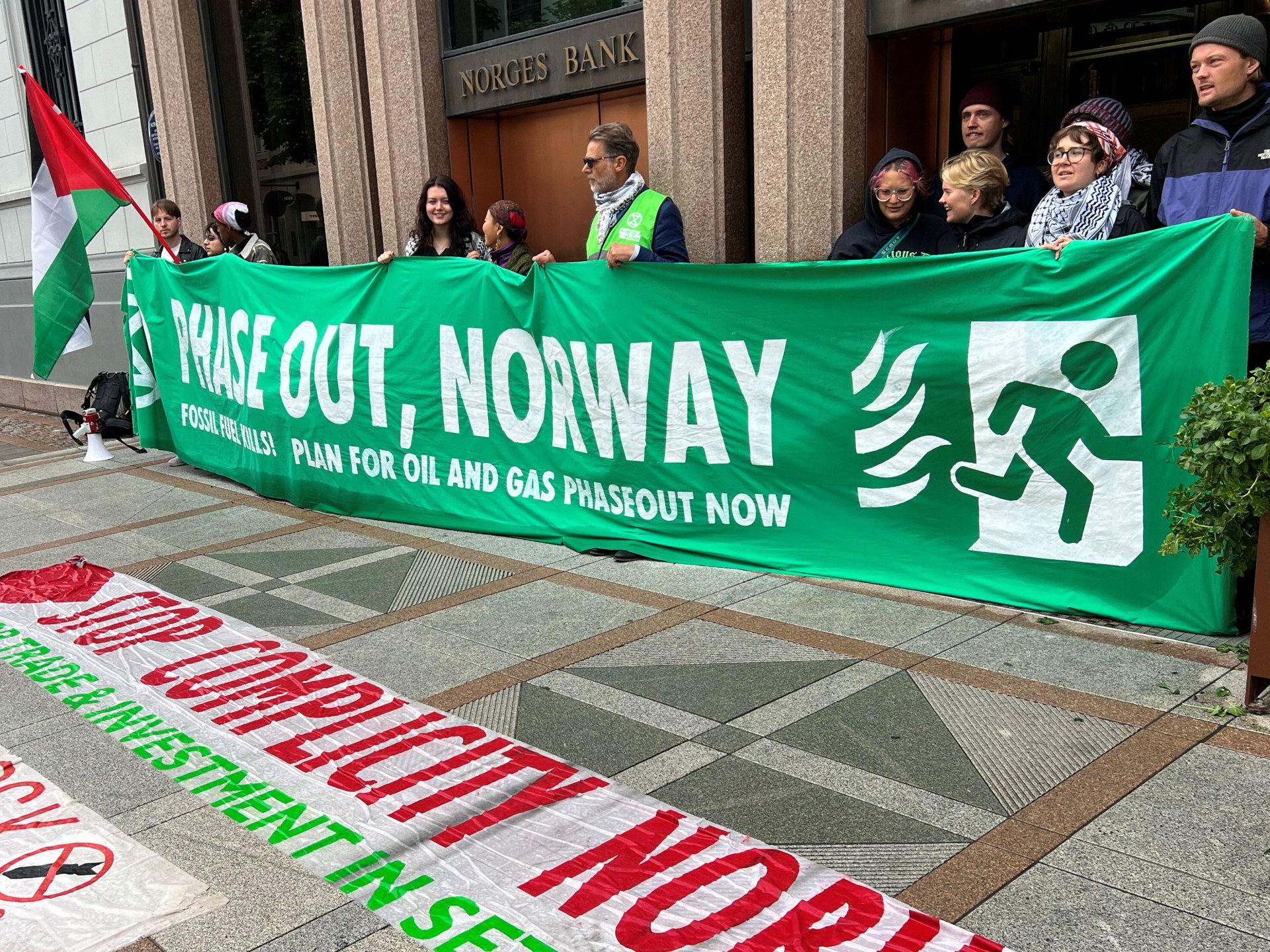

A government-appointed committee has called for Norway’s sovereign wealth fund to lift limitations on its investments based on ethical risks, including those regarding nuclear weapons and Israel’s genocidal war on Gaza.
In a report released on Thursday, the committee said the world’s largest sovereign wealth fund, which controls assets totalling nearly $2.3 trillion, should be allowed to invest in companies that produce nuclear weapons. With reference to Gaza, it also called for the fund to refrain from involvement in diplomatic issues.
- list 1 of 3Israel has detained more than 2,000 Palestinian children since 2023: report
- list 2 of 3EU states to raise game as Arctic becomes strategic geopolitical frontier
- list 3 of 3Finland shelters under French nuclear umbrella amid Russian, US uncertainty
end of list
Led by former Central Bank Governor Svein Gjedrem, the committee recommended easing the fund’s investment conditions as part of a broader overhaul that would give its manager, the central bank, greater discretion over how it addresses ethical risks.
The review was prompted in part by controversy over the fund’s disinvestment last year from United States construction giant Caterpillar. The fund said the move was prompted by Caterpillar’s purported involvement in rights violations perpetrated by Israel amid its genocidal war on Gaza and in the occupied West Bank. Washington has since pressured Oslo over the move.
“Parts of the rationale for the appointment of the Committee was the Fund’s management related to the war in Gaza,” the committee commissioned by the government said. In the report, it argued that decisions regarding “another state’s conduct” should not be made by the fund but “reserved for the ordinary diplomatic channels of the Norwegian authorities”.
Advertisement
The unanimous recommendations of the committee in the report, which was submitted to the Ministry of Finance, also called for a review of the fund’s exclusion of investment in companies involved in the production of nuclear weapons.
Citing Norway’s reliance on NATO’s nuclear deterrent and a worsening security environment, the report suggested that investments in companies based in the US, United Kingdom and France that are involved in the production of nuclear weapons should be allowed.
The proposals also extended to reshaping the role of the fund’s independent ethics watchdog, allowing some assessments of potential investments to remain confidential.
The report has already provoked a backlash in Norway, with opposition politicians slamming the potential changes. Meanwhile, analysts suggested that weakening ethics considerations could have a wide impact.
“If the Norwegian sovereign wealth fund – often considered a global gold standard – changes its posture towards nuclear weapons, it will open Pandora’s box for many global investors to follow suit,” Lawrence Loh, director of the Centre for Governance and Sustainability at the National University of Singapore Business School, told Al Jazeera.
The committee framed the proposed change as an obligation to protect Norway’s national security, citing the country’s dependence on its allies’ nuclear umbrella.
“The global security situation has changed. Norway is building up its defence capabilities, and the protection provided by NATO’s nuclear umbrella has become increasingly important. The companies that would be reincluded produce weapons that Norway needs for its own defence”, the report argued.
Gareth Evans, former Australian foreign minister, told Al Jazeera the report was “an encouraging initiative in a world that has become alarmingly complacent about the risks of nuclear war, with every major nuclear arms control agreement dead, dying or on life support, and the longstanding taboo against threat or use eroding”.
Amid US President Donald Trump’s shake-up of NATO, European countries are increasingly looking to join France’s nuclear deterrent umbrella.
Trump said on Thursday that Washington is holding talks with Russia and China aimed at denuclearising the countries with the biggest stockpiles of nuclear weapons.
However, Loh warned that shifting the Norwegian fund’s investment conditions could encourage investment by others in nuclear companies “in scenarios different from the Norwegian’s condition of the invested companies being based in allied, nuclear-armed NATO countries”.
Advertisement
Related News
Why have US prosecutors labelled China’s Huawei a criminal enterprise?
Iran’s Araghchi meets Qatari mediators as US calls for nuclear talks

Why has Iraq decided to ban online map service Waze?