

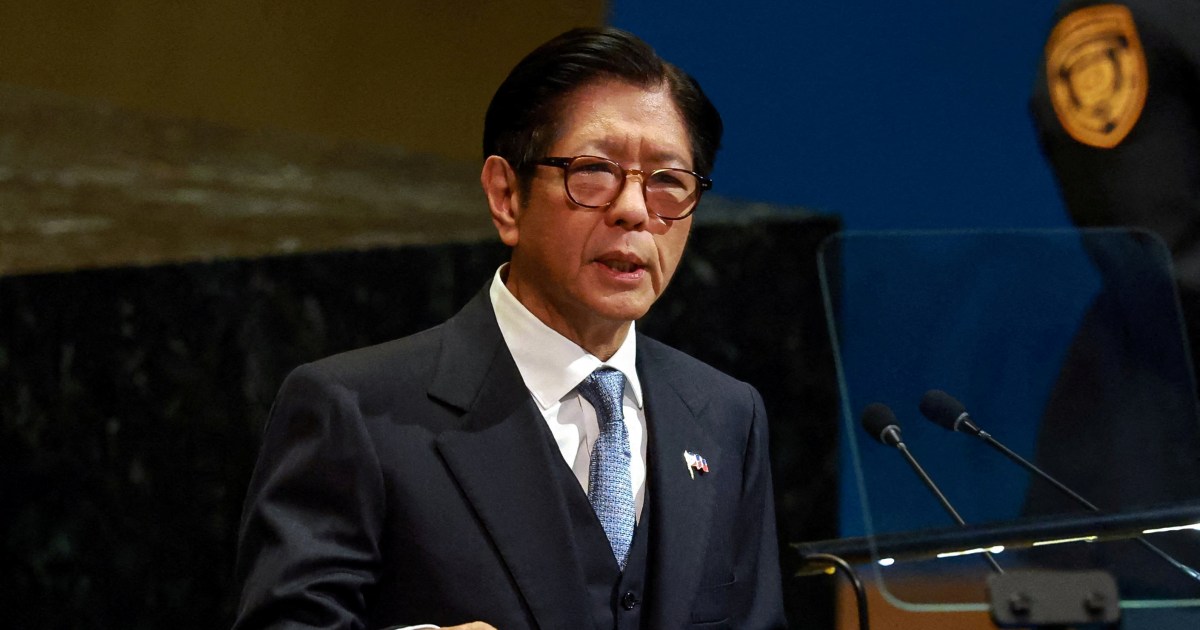

Philippine President Ferdinand Marcos Jr has declared a national energy emergency in response to the US-Israel war on Iran and what he called the “imminent danger” posed to the country’s energy supply.
The emergency declaration on Tuesday came as Philippine transport workers, commuters and consumer groups plan to hold a two-day strike from Thursday to protest the increase in fuel prices and what they say is the Marcos administration’s failure to swiftly respond.
- list 1 of 4Arms manufacturer thrives amid US-Israel war on Iran
- list 2 of 4Trump keeps up claims of talks with ‘the right people’ in Iran
- list 3 of 4Has Iran brought down an ‘unkillable’ US F-35 jet?
- list 4 of 4Iranian missiles cause injuries and major damage across Israel
end of list
“The declaration of a state of national energy emergency will enable the government… to implement responsive and coordinated measures under existing laws to address the risks posed by disruptions in the global energy supply and the domestic economy,” Marcos Jr said.
As part of the emergency response, a committee has been formed to ensure the orderly movement, supply, distribution and availability of fuel, food, medicine, agricultural products and other essential goods, he said.
The emergency declaration, which will remain in force for one year, authorises the government to procure fuel and petroleum products to ensure timely and sufficient supply and, if necessary, pay part of the contract amount in advance.
Authorities are also empowered to take action against the hoarding, profiteering and manipulation of petroleum product supplies.
Earlier on Tuesday, Secretary of Energy Sharon Garin told a news briefing that the country still had about 45 days of fuel supply, based on current consumption levels.
Garin said the government was working to procure 1 million barrels of oil from countries within and outside Southeast Asia to build its buffer stock, but there will likely be uncertainties in reaching this level.
Advertisement
Philippine Ambassador to the US Jose Manuel Romualdez told the Reuters news agency that Manila was working with Washington to secure exemptions that would allow for the purchase of oil from countries under US sanctions.
“All options are being considered,” the ambassador said in response to whether Iranian and Venezuelan oil was part of the talks with the US.
But transport unions and Philippine senators have criticised the government’s response to the crisis, accusing the Marcos administration of lacking a unified and coordinated action to mitigate the fallout from the surge in oil prices.
Piston, a federation of public transport associations, described the declaration of a national energy emergency as a “superficial band-aid that deliberately ignores the structural roots of the fuel crisis”.
“If the government genuinely intends to protect transport workers and commuters from this geopolitical crisis, it would immediately suspend the Excise Tax and Value-Added Tax on petroleum products to drastically lower prices overnight,” Piston said in a statement on Tuesday.
“Furthermore, tasking the Department of Energy to merely monitor ‘profiteering’ is a toothless gesture as long as multinational oil cartels remain legally empowered to dictate extortionate pump prices at will.”
Renato Reyes Jr, of the progressive civil society coalition Bayan, said the declaration “does not address the basic problem of runaway oil prices and [their] effects on the mass transport system and other sectors in the country”.
“It does not mention removing or suspending oil taxes, which are at the core of the people’s demands,” Reyes Jr told Al Jazeera.
“Where are the needed price controls?”
As part of the government’s mitigation measures, students and workers in some cities are being given free access to bus rides, and the government has started to provide a 5,000 peso ($83) subsidy to motorcycle taxi drivers and other public transport workers nationwide to help them cope with soaring gasoline and diesel prices.
With reporting from Manila by Michael Beltran.
Related News

Dolores Huerta, sexual violence survivors speak out against Cesar Chavez
Kuwait oil refinery hit again as Iran targets Gulf energy infrastructure
Emerging from latest blackout, Cuba says ready for any potential US attack