

United States Vice President JD Vance has cast the tie-breaking vote to defeat a war powers resolution that would have forced President Donald Trump to seek Congress’s approval before taking any further military action in Venezuela.
The Senate’s session on Wednesday evening came to a nail-biting conclusion, as the fate of the resolution ended up resting on the shoulders of two Republican politicians.
- list 1 of 3Is the US War Powers Act unconstitutional, as President Trump says?
- list 2 of 3‘We do not want to be Americans’: Greenlanders fear US threat to annex
- list 3 of 3Trump envoy announces launch of ‘phase two’ of plan to end Gaza war
end of list
Senators Todd Young of Indiana and Josh Hawley of Missouri had voted last week, as part of a group of five breakaway Republicans, to put the resolution to a full Senate vote. With unanimous support from Democrats, the measure advanced with 52 votes in favour, 47 against.
But supporters of the resolution could only afford to lose one vote in order to secure the bill’s passage. By Wednesday, it had lost two: both Young and Hawley.
The final vote was evenly split, 50 to 50, allowing Vance to act as tie-breaker and defeat the resolution.
Hawley signalled early in the day that he had decided to withdraw his support. But Young was a wild card until shortly before the final vote took place
“After numerous conversations with senior national security officials, I have received assurances that there are no American troops in Venezuela,” Young wrote on social media.
“I’ve also received a commitment that if President Trump were to determine American forces are needed in major military operations in Venezuela, the Administration will come to Congress in advance to ask for an authorization of force.”
Advertisement
Young also shared a letter, dated Wednesday, from Secretary of State Marco Rubio, offering lukewarm assurances that Congress would be notified ahead of any future military action in Venezuela.
“Should the President determine that he needs to introduce US Armed Forces into hostilities in major military operation in Venezuela, he would seek congressional authorizations in advance (circumstances permitting),” Rubio wrote.

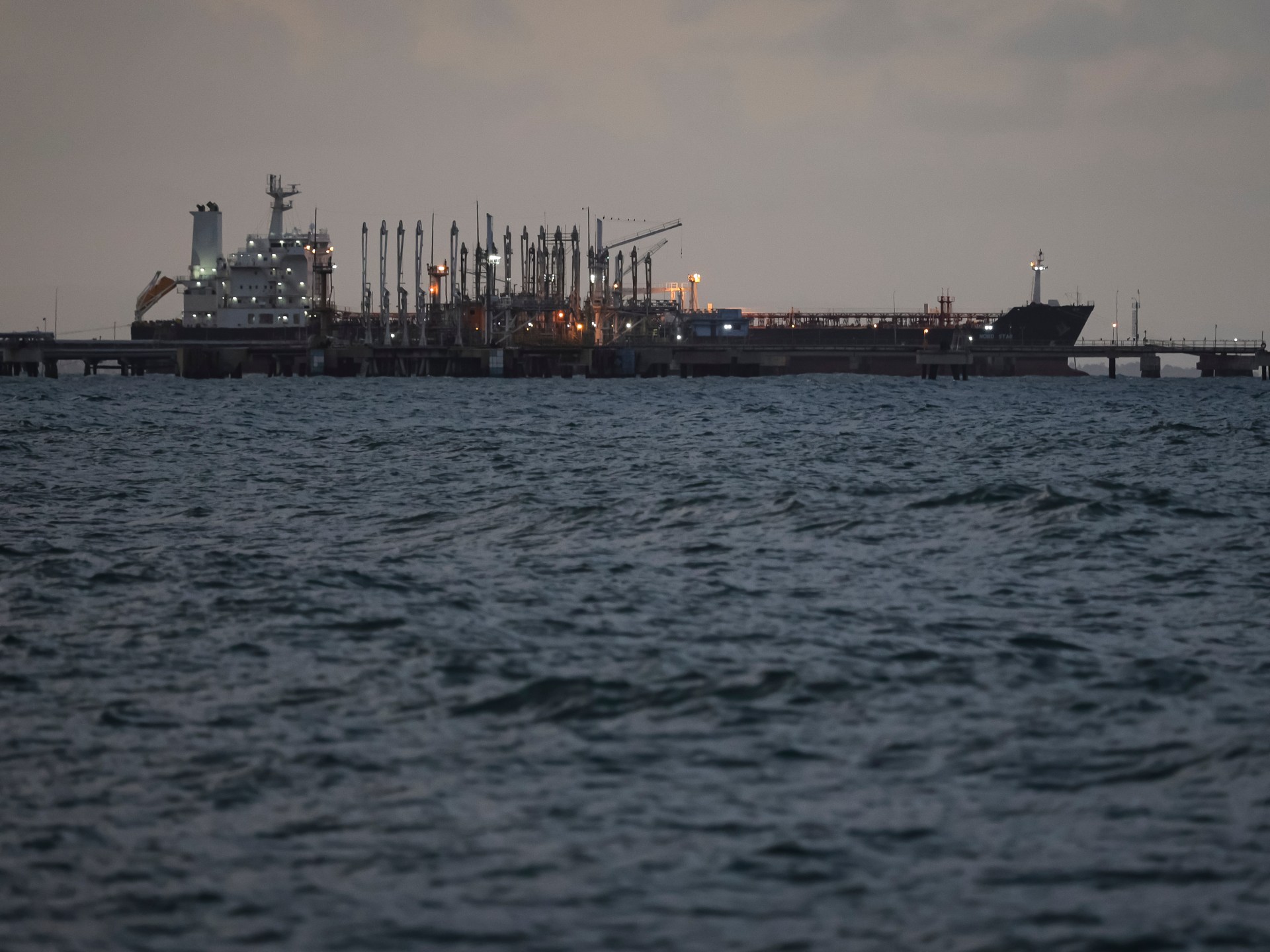
The latest war powers resolution arrived in response to a surprise announcement on January 3 that Trump had launched a military action to topple Venezuelan President Nicolas Maduro.
Explosions were reported in the Venezuelan capital of Caracas and nearby military bases, and Trump appeared in a broadcast hours later to announce that the US had abducted Maduro and transported him to the US to face criminal trial.
Maduro’s wife Cilia Flores was also captured as part of the operation.
Two US service members were injured in the attack, and as many as 80 people in Venezuela were killed, including Cuban security personnel involved in guarding Maduro.
“We’re going to run the country until such time as we can do a safe, proper and judicious transition,” Trump said in his speech announcing the attack.
He and Rubio then fielded questions about whether Congress had been notified about the operation. They acknowledged they did not notify lawmakers in advance.
“This was not the kind of mission that you can do congressional notification on,” Rubio said. “It was a trigger-based mission.”
Trump, meanwhile, argued that congressional notification had been a liability to the mission’s security. “Congress will leak, and we don’t want leakers,” he said.
Normally, the US Constitution divides up military authority between the legislative and executive branches. While the president is considered the commander-in-chief of the armed forces, only Congress has the power to declare war and authorise military action.
But that division of power has become gradually eroded, as the executive branch has exercised greater authority over the military.
In recent decades, presidents have often justified unilateral military action by referring to authorisations of military force (AUMFs) approved by Congress in the wake of the attacks on September 11, 2001.
But military action in Venezuela falls outside of the purview of those authorisations, raising questions about the legal justification for the January attack.
Advertisement
On Tuesday, the Department of Justice published a 22-page memo it originally wrote in December to justify the forthcoming attack. That memo argued that, since Maduro’s abduction was an act of “law enforcement”, it fell short of the legal threshold that would have required congressional approval.
In addition, the document asserted that, since the planned military operation was not expected to trigger a war, it also landed outside of Congress’s powers.
“The law does not permit the President to order troops into Venezuela without congressional authorization if he knows it will result in a war,” the memo explained. “As of December 22, 2025, we have not received facts indicating it will.”

But not every Republican agreed with that explanation, and several sought to claw back Congress’s power to oversee US military action.
They included senators Lisa Murkowski of Alaska, Rand Paul of Kentucky and Susan Collins of Maine, all seen as pivotal swing votes in Congress’s upper chamber.
Young and Hawley joined the three rogue Republicans for an initial vote to advance the war powers resolution on January 8. But afterwards, all five came under acute pressure to switch sides and rejoin the Republican caucus for the final vote.
President Trump, in particular, denounced the five Republicans on his social media platform Truth Social.
“Republicans should be ashamed of the Senators that just voted with Democrats in attempting to take away our Powers to fight and defend the United States of America,” he wrote in a post.
“This Vote greatly hampers American Self Defense and National Security, impeding the President’s Authority as Commander in Chief.”
Reports emerged that Trump even called some of the senators in advance of Wednesday’s vote, in an effort to gain their support. But the publication The Hill indicated that Trump’s conversation with Collins devolved into a “profanity-laced rant”.
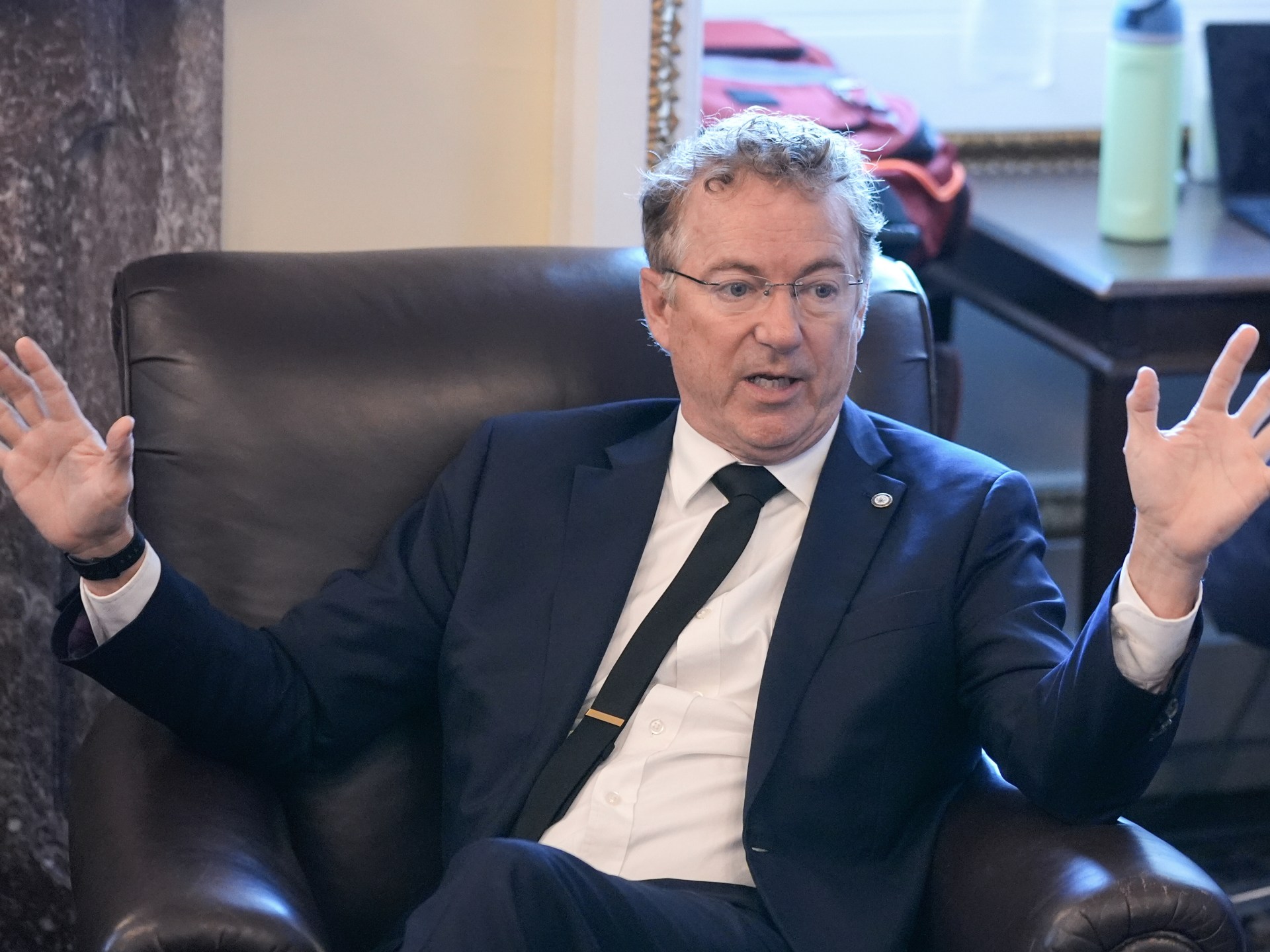
Paul, another Republican who has also courted Trump’s ire, was among the senators to speak before Wednesday’s final vote.
He defended his decision to back the war powers resolution, calling his vote a necessary act to uphold the Constitution’s separation of powers.
“This isn’t really and shouldn’t be Republican versus Democrat. This should be legislative prerogative versus presidential prerogative, and it should be about the Constitution,” Paul said.
“The Constitution — specifically, thoughtfully — vested the power of initiating war and declaring war to Congress,” he added.
“The spectrum of our founding fathers concluded they didn’t want the president to have this power.”
Risking Trump’s ire comes at a higher cost for some Republicans than others. Of the three Republicans who joined Democrats on Wednesday to vote for the war powers resolution, only one is up for re-election this year in the US midterm races: Collins.
Advertisement
Related News

New Year’s Eve sparklers may have caused deadly Swiss bar fire: Official
Brazil’s Supreme Court rejects Jair Bolsonaro’s request for house arrest

Which aid groups is Israel banning from Gaza now – and what will it mean?