

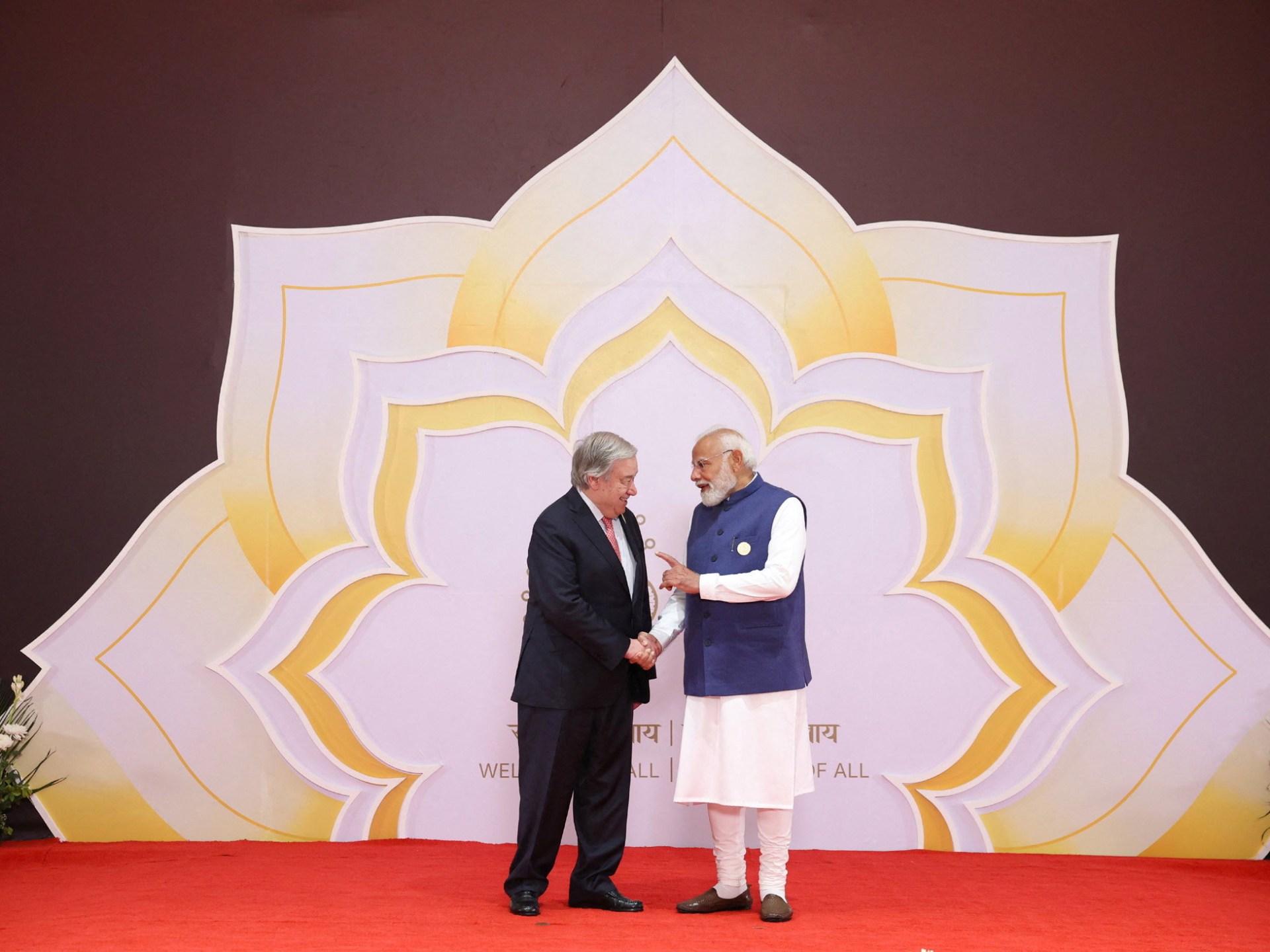

The fourth, and most high-profile, day of a global artificial intelligence summit in India is under way with world leaders such as United Nations chief Antonio Guterres and French President Emmanuel Macron taking the floor to discuss how to handle the fast-advancing technology that is prompting investment enthusiasm and deep concern in equal measure.
The huge gathering in New Delhi is the fourth in a series of international AI meetings that have been taking place since 2023 in France, South Korea and the United Kingdom. Job disruption, child safety and regulations have topped the agenda of this year’s edition.
- list 1 of 3‘An apocalypse’: Why are experts sounding the alarm on AI risks?
- list 2 of 3Are ‘low-cost, high-impact’ drones making Sahel fighters tougher to beat?
- list 3 of 3Indian university faces backlash for presenting Chinese robot as its own
end of list
Guterres spoke on Thursday, warning of the risks of AI, saying its future cannot be left to “the whims of a few billionaires”. The UN chief called on tech tycoons to support a $3bn global fund to ensure open access to the fast-advancing technology for all.
The French president also spoke of needing deep involvement: “The message I have come to convey is what is that we are determined to continue to shape the rules of the game, and to do with our allies such as India,” Macron said.
“Europe is not blindly focused on regulation – Europe is a space for innovation and investment, but it is a safe space.”
While this year is touted to be the biggest edition yet, with thousands of attendees, there is one noticeable absentee.
Microsoft founder Bill Gates, facing questions over his ties to late sex offender Jeffrey Epstein, withdrew just hours before he was due to speak to “ensure the focus remains on the AI Summit’s key priorities”, the Gates Foundation said.
Advertisement
Another Gates Foundation official will take the place of Gates, who said this month he regrets “every minute” he spent with Epstein. As the first global AI meeting held in a developing country, the five-day summit, which wraps up on Friday, has also been a chance for India to boost its position in the booming sector.
Last year, the country leapt to third place in an annual global ranking of AI competitiveness calculated by Stanford researchers.
But despite plans for large-scale infrastructure and grand ambitions for innovation, experts say it has a long way to go before it can rival the United States and China.
Speaking on Thursday, India’s Prime Minister Narendra Modi highlighted recent launches of AI models by Indian companies, saying that “the AI model which succeeds in India can be deployed all over the world”.
“India believes that AI technology will only be beneficial when it is shared and its core systems are open; only then will our millions of young minds be able to make it better and safer,” Modi added.
“We must resolve that AI is used for the global common good.”
Modi, breaking into English, added: “We are entering an era where humans and intelligence systems co-create, co-work and co-evolve.”
Related News

UK court says Palestine Action ban ‘unlawful’: What does the verdict mean?

‘Won’t be silent’: Thousands protest Israeli president’s Australia visit

US judge says wrongfully deported Kilmar Abrego Garcia can’t be re-detained