Human rights court orders reparations for forced sterilisation case in Peru
 06 March 2026
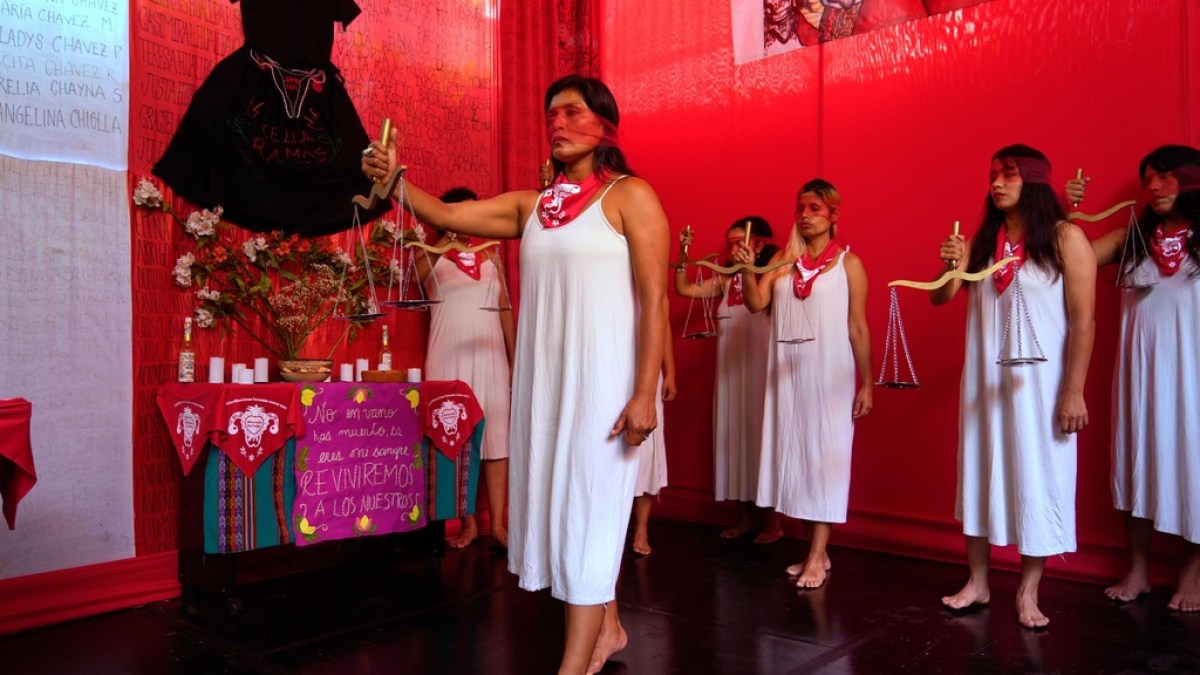

The Inter-American Court of Human Rights (IACHR) has ordered Peru to pay reparations to the family of Celia Ramos, a mother of three whose death resulted from a campaign of forced sterilisations during the 1990s.
Thursday’s landmark ruling stated that the 34-year-old Ramos was coerced into sterilisation against her will, causing an allergic reaction that led to her death.
- list 1 of 3Peru appoints Jose Maria Balcazar as president, ninth leader in a decade
- list 2 of 3Peruvian municipal officials say three killed in attack on informal mine
- list 3 of 3Peru’s Congress votes to impeach President Jose Jeri in government shake-up
end of list
The court ordered Peru to pay her family $340,000 as part of the ruling.
It noted that the Peruvian government had “failed to fulfill its obligation to initiate and conduct a thorough investigation” into Ramos’s case, heightening the strain on her family.
“Ms Ramos Durand’s family members — especially her three daughters, who were children at the time of the events — suffered profound harm as a consequence of the sterilization and death of Celia Edith Ramos Durand and the impunity surrounding the case,” the IACHR wrote in its decision.
Peru’s campaign of forced sterilisation took place under the late President Alberto Fujimori, whose tenure included widespread human rights abuses that continue to cast a shadow over the country.
The scheme largely targeted poor and Indigenous women who were often tricked or coerced into sterilisation procedures.
This week’s ruling is the first time the human rights court has weighed in on the issue, which has been the subject of years of legal contestation in Peru.
“After almost 30 years of searching for justice, the Inter-American Court of Human Rights recognised the responsibility of the Peruvian state in the forced sterilisation and death of Celia Ramos,” the Peruvian feminist organisation DEMUS said in a social media post, celebrating the ruling.
Advertisement
“This ruling marks a fundamental step in reparations for Celia, her family and the thousands of victims of forced sterilizations in Peru.”
As many as 314,000 women and 24,000 men were sterilised against their will in Peru under Fujimori’s government, which sought to forcibly lower the birth rate as a means of addressing poverty.
The procedures were particularly invasive for the women involved, and some suffered long-term complications, including death.
Family members often received little information about the circumstances that led to loved ones dying after the unnecessary operations. Some survivors did not realise what had happened to them until years later, when they discovered they were unable to have children.
In Ramos’s case, the 34-year-old mother had gone to a state health clinic for medical assistance on July 3, 1997, but was instead forced to undergo tubal ligation.
Ramos, however, suffered a severe allergic reaction during the procedure. She was placed in a recovery room, but the clinic was not able to treat her adequately.
In its decision, the IACHR explained that the clinic “lacked the necessary equipment and medications for adequate risk assessment or to handle emergencies”.
Ramos was ultimately transferred to an intensive care unit in the city of Piura, where she died 19 days later, on July 22, 1997.
The state did not carry out an autopsy and declined to share details with her family.
The compensation outlined in this week’s ruling includes reimbursement for the costs of medical procedures conducted to save Ramos’s life and the estimated loss of income from her death.
In October 2024, the Committee on the Elimination of Discrimination against Women at the United Nations ruled that Peru’s sterilisation programme amounted to sex-based violence and discrimination against poor, rural and Indigenous women.
The committee’s statement cited a lack of adequate medical facilities and a lack of informed consent, just as the IACHR did in its decision this week.
“The victims described a consistent pattern of being coerced, pressured, or deceived into undergoing sterilisations at clinics lacking proper infrastructure or trained personnel,” committee member Leticia Bonifaz said.
“The procedures were carried out without informed consent from these victims, with some of them, especially those from remote areas, unable to read and speak Spanish, or fully understand the nature of the procedure.”
Scholars have concluded that Fujimori’s sterilisation campaign was driven, in part, by racist views among government officials who saw rural, Indigenous communities as an obstacle to economic modernisation.
Advertisement
But Fujimori’s legacy remains fiercely contested in Peru.
Victims who have spoken out about their experiences have reported being harassed and threatened by supporters of Fujimori, whose daughter Keiko remains an influential figure in national politics.
She is a candidate for the presidency in Peru’s upcoming general elections in April.
Formerly a representative in Peru’s Congress, Keiko Fujimori served as first lady under her father from 1994 to 2000. She has long denied that he is guilty of any human rights abuses, reflecting a trend of denialism in the country.
In 2009, the elder Fujimori was convicted of human rights violations and sentenced to 25 years in prison, but in 2017, then-President Pedro Pablo Kuczynski issued a pardon for Fujimori that was subsequently contested in court.
He was ultimately released in December 2023 but died several months later, in 2024.
Since his death, advocates have continued to push for accountability from other high-level government officials in his administration.
Related News
‘Worst-case scenario’: Trump weighs replacing Khamenei as leader of Iran
Slovakia halts emergency power supplies to Ukraine over Russian oil dispute
Pakistan says ‘no dialogue’ with Afghanistan as attacks persist