

Iran fired missiles at Kuwait and Bahrain in the early hours of Wednesday, and the United States launched strikes on Iran’s Qeshm Island, as tensions in the Gulf spiked amid an impasse in diplomatic efforts to end the war between Tehran and Washington that is now closing in on 100 days.
Since the conflict began in late February, Iran has repeatedly targeted countries across the Gulf where US military bases are located. Armed hostilities had largely subsided after a temporary Pakistan-mediated ceasefire took effect on April 8. But the latest flare‑up has raised fears that full‑scale fighting could resume.
Here is a look at what happened overnight, and where things stand on the diplomatic front.
What happened in Kuwait and Bahrain?
Kuwait’s state news agency KUNA said Iranian missiles and drones had hit the country’s international airport on Wednesday morning. It reported an unspecified number of injuries, damage to airport facilities and flight suspensions and diversions.
On Wednesday, the Indian Embassy in Kuwait posted an X post saying that an Indian national had died due to the attack on the airport in Kuwait.
But US Central Command (CENTCOM) said two Iranian missiles shot at Kuwait fell short or broke apart in flight, while several ballistic missiles failed to reach their targets. Iran’s semi-official Tasnim news agency earlier said the Islamic Revolutionary Guard Corps (IRGC) had launched missiles and drones at US helicopters stationed in a regional country, in an apparent reference to Kuwait.
Advertisement
It is unclear whether the US helicopters the IRGC was reportedly targeting were stationed at the Kuwaiti airport or whether intercepted projectiles fell by accident on the airport.
According to Tasnim, the IRGC also fired missiles and drones at an airbase and the headquarters of the US Fifth Fleet in Bahrain, where sirens went off warning residents of an attack.
However, CENTCOM said it had intercepted the projectiles aimed at Bahrain. It also said no US personnel or assets were harmed in the attacks on Kuwait and Bahrain.
Was Iran also hit?
Just before Iran fired missiles and drones at Kuwait and Bahrain, US forces hit a telecommunications tower on Iran’s Qeshm Island, which sits in the Gulf and is believed to be a repository of the country’s missiles stored in underground facilities.
CENTCOM said the US military also downed Iranian drones targeting civilian ships in regional waters.
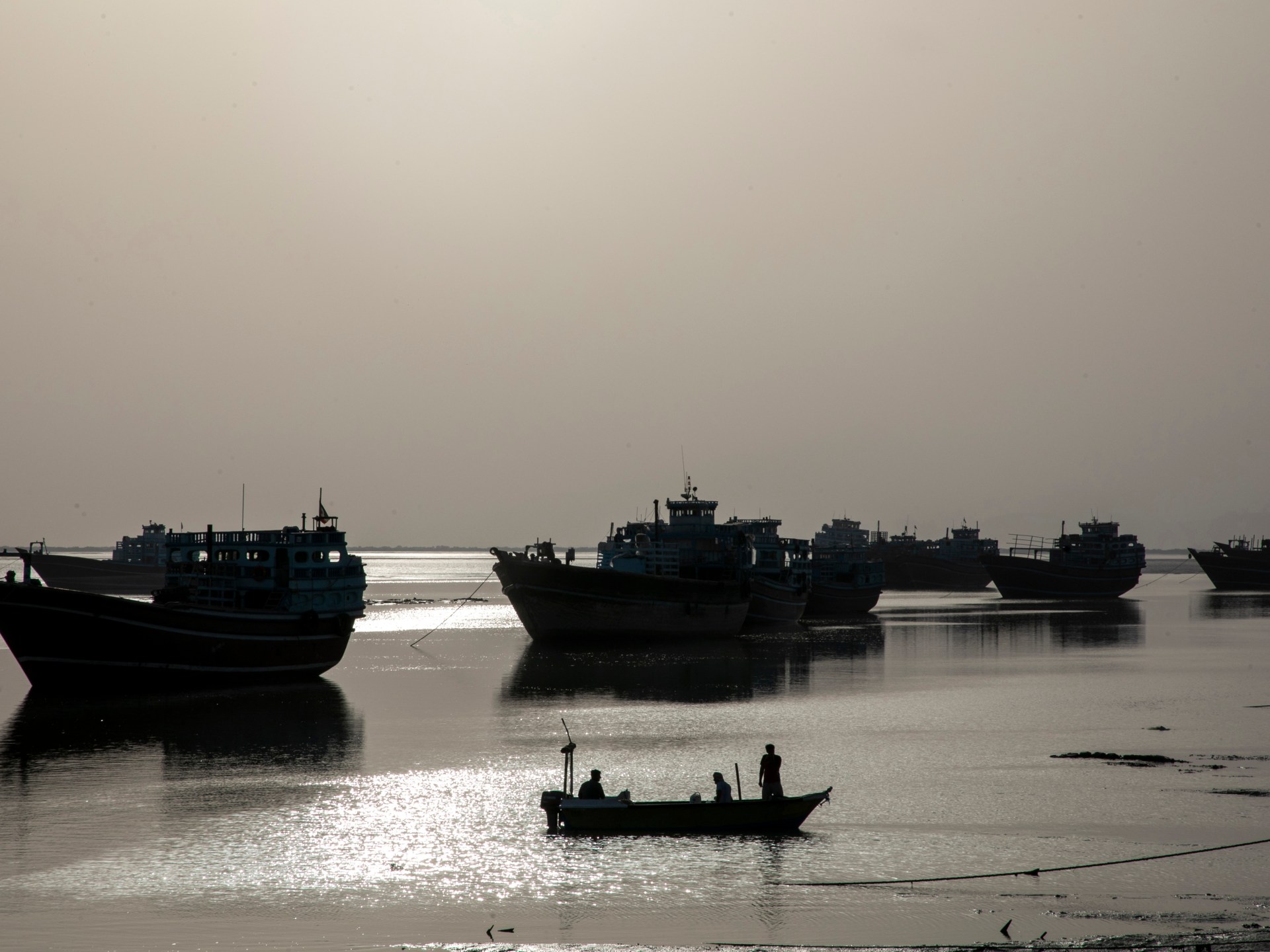
Tehran said US forces struck an Iranian oil tanker near the Strait of Hormuz, damaging its engine room. Iranian media reported the IRGC’s navy targeted a vessel it identified as “Panaya” with missiles in response to the attack on the Iranian tanker.
Hold on, so who hit whom first?
The US and Iran have competing narratives. But the Trump administration has made clear that it will not allow Iranian oil to pass through the Strait of Hormuz as it maintains its blockade of Iranian ports and ships.
- The escalation on Wednesday morning appears to have begun with the US hit on the Iranian oil tanker.
- Both sides appear to concur that Iran then attempted to strike other vessels in the Gulf.
- The US says it shot down the Iranian drones fired at ships and then hit Qeshm Island.
- Iran hit back by firing at Kuwait and Bahrain.
The Ministry of Foreign Affairs condemned the US attacks on Qeshm Island as a violation of the ceasefire.
It said Kuwait and Bahrain bore “direct and clear responsibility” for the attacks, alleging their territory and facilities had been used to support US military operations against Iran.
Iran said it reserved the right to self-defence and would use all available means to respond, including by targeting the source of any future attacks.
“Disrupting the security of the Strait of Hormuz will carry a heavy price for the US military,” Iranian media reported, citing the IRGC.
Secretary of State Marco Rubio told lawmakers on Tuesday that the US would agree to sanctions relief only if Iran agrees to give up its nuclear activity.
Advertisement
“The war is over,” Rubio declared during a sharp exchange with Democratic Senator Cory Booker of New Jersey, who disagreed.
He also told Congress that Iran’s supreme leader, Mojtaba Khamenei, is alive and becoming “increasingly engaged” in negotiations with Washington. Khamenei has not appeared publicly since reportedly being wounded in US-Israeli strikes that killed his predecessor and father, Ayatollah Ali Khamenei.
Tehran is seeking access to billions of dollars in oil revenues, waivers on crude exports, a lifting of a US blockade on its ports and continued leverage over the strait, which handled a fifth of the world’s oil and liquefied natural gas traffic before the war.
Iran’s chief negotiator, Mohammad Bagher Ghalibaf, said during a conversation with Lebanese Parliament Speaker Nabih Berri that Tehran could abandon negotiations with the US and move towards confrontation if Israeli attacks on Lebanon continue.
How have attacks escalated recently?
After weeks of a lull following the ceasefire, the US and Iran have increased their exchange of attacks in recent weeks.
Late on Sunday, CENTCOM said it conducted “self-defense strikes” on Iranian radar and drone sites in the city of Goruk and on Qeshm Island over the weekend.
A day later, the general staff of the Kuwaiti armed forces said its air defences were “confronting hostile missile and drone attacks”. If sounds of explosions are heard, they are the result of air defences intercepting the projectiles, it added.
On May 17, authorities in Abu Dhabi, UAE, said a single drone strike caused a blaze to break out at an electrical generator outside the Barakah plant’s inner perimeter in the al-Dhafra region on Sunday. No injuries were reported, and officials said radiation levels remained normal.
Related News
Israeli strikes kill six in southern Lebanon amid fresh evacuation orders
Israeli air attacks kill seven Palestinians in Gaza

Cockroach Janta Party’s founder says Indian government took website down