Demolition complicates the search for bodies after Venezuela’s earthquakes
 05 August 2026
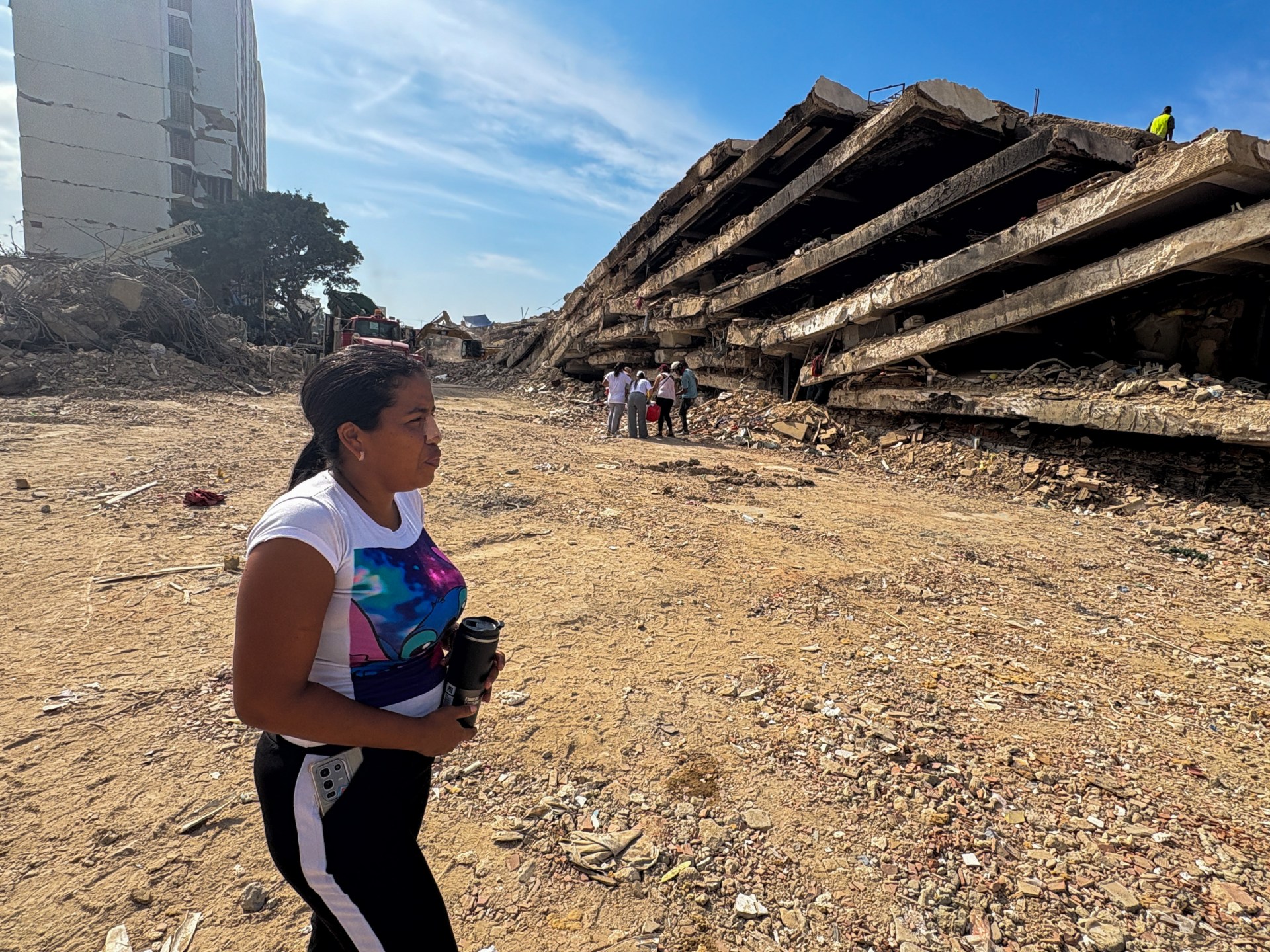

La Guaira, Venezuela – Glenda Viloria does not remember the exact number of children’s bodies she has seen in the past few weeks at the morgue in La Guaira, Venezuela. But she remembers their faces — at least those that were still recognisable.
Yet none of them were her three-year-old nephew, Mateo.
So far, Viloria has recovered the bodies of six family members, including her mother and sister. They lived in OPPE 27, a high-rise government housing complex in the coastal town of Caraballeda.
The four apartment blocks that comprised OPPE 27 were among the nearly 190 buildings that collapsed on June 24, when a pair of twin earthquakes struck Venezuela. Hundreds of other structures were damaged, without hope of repair.
Six weeks later, efforts are ongoing to clear the destruction. On July 30, Venezuela demolished a tower in a housing complex in Catia La Mar, La Guaira, after experts declared it at risk of collapse.
It was the first building to be brought down in a controlled explosion, with more demolitions expected.
But the decision to level buildings and clear wreckage has been controversial, particularly for survivors like Viloria, still searching for the bodies of their loved ones. Viloria remains determined to find her late sister's toddler.
"I promised I was not going to rest until I found her son, Mateo,” she said.
Until last year, Viloria had also lived in OPPE 27, and she loved Mateo as if he were her own child. Even after moving away, she returned regularly to take care of him. "We were a very beautiful and close-knit family," she explained.
Viloria sleeps in a small tent next to the site that was once OPPE 27. Heavy-duty excavators have rumbled past in recent weeks, clearing piles of crushed concrete and twisted metal.
The push to clear the site has left Viloria with difficult decisions. When she and other volunteers found her mother’s body, it was trapped beneath concrete columns inside a narrow tunnel they could barely access.
"I had to give the order for my mother’s body to be cut apart. They had to do it with a saw. The body was already decomposing and was about to burst," she said. "This is something I truly can never forget."
Now, all that remains of her family's building is a patch of dusty ground. There is no physical trace of the home where they once lived. Still, Viloria said she cannot leave.
"I am not going to rest," she said. "Because that boy was like a son to me."
Related News

US defense chief Hegseth puts Iran war cost at $37.5bn so far
US man arrested at Trump’s golf course charged with multiple felonies
Houthis want to copy Iran’s Hormuz control in the Red Sea: Yemeni FM