

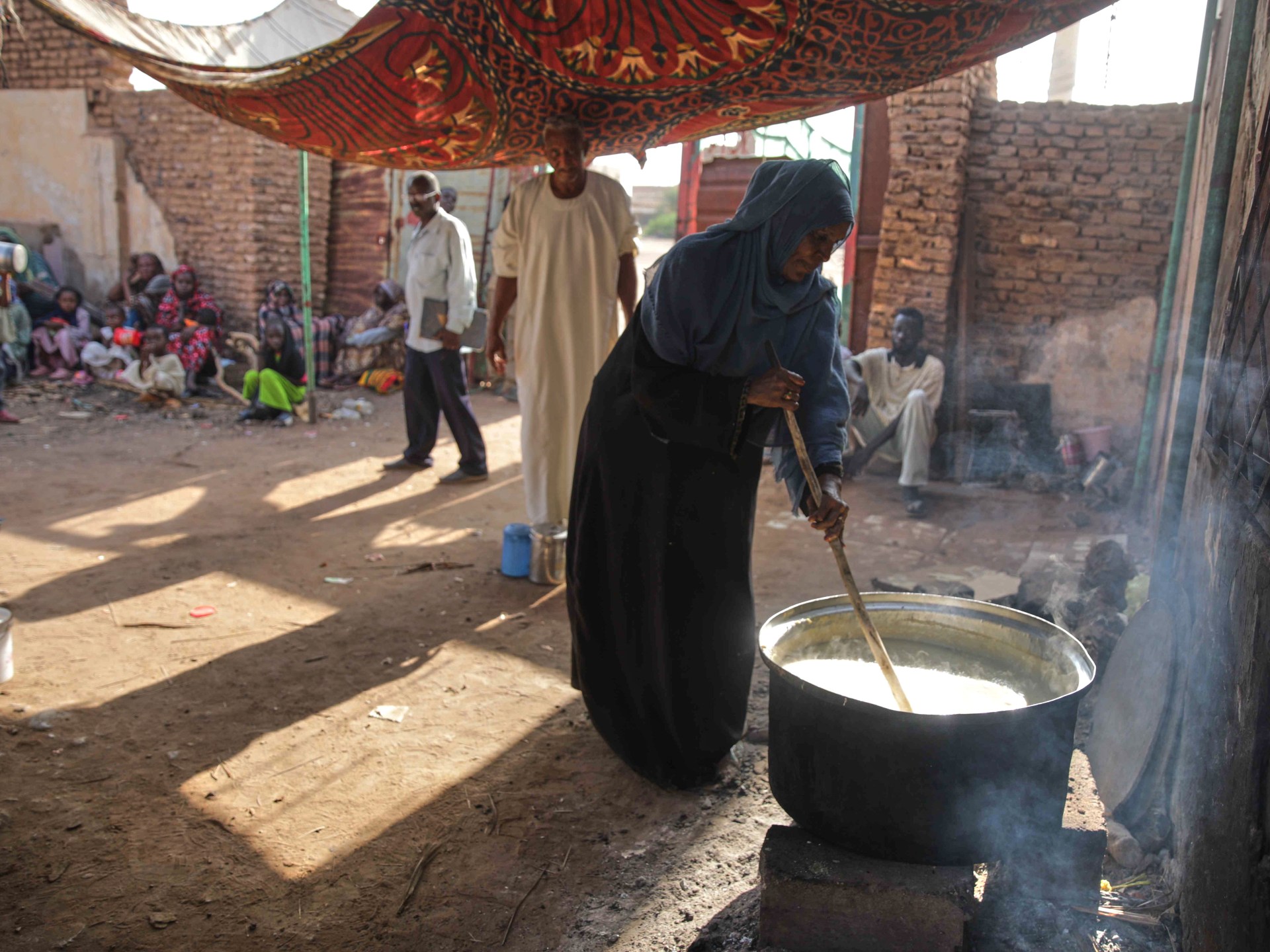

Conflict and drought are increasing the risk of famine across Sudan’s Darfur and Kordofan regions, warns a global food crisis monitor.
“An El Nino-induced drought, affecting roughly half of the country, is compounding the impacts of conflict and displacement, reducing food availability, driving up prices and affecting livelihoods,” the Integrated Food Security Phase Classification (IPC) said on Monday in a statement.
- list 1 of 3UN rights council condemns attacks on civilians in Sudan, calls for truce
- list 2 of 3Sudan’s al-Burhan rejects talks, vows to retake all territory from RSF
- list 3 of 3Drone strike kills 30 people in Sudan’s Blue Nile region
end of list
“Healthcare is extremely limited, often entirely inaccessible, while clean water is becoming increasingly scarce, leaving a poorly nourished population highly vulnerable to disease and death,” it added.
The IPC is an initiative aimed at enhancing food security and consists of 21 organisations and intergovernmental institutions, including the United Nations Children’s Fund (UNICEF), the World Bank, the World Food Programme (WFP) and the World Health Organization (WHO).
‘Food insecurity, acute malnutrition and excess mortality’
Farmers’ livelihoods have deteriorated and dependence on food assistance is on the rise, said the IPC. “Food insecurity, acute malnutrition and excess mortality will likely intensify,” it warned.
Poor vegetation growth affects nearly two-thirds of cropland in North Darfur and about half in South Darfur, West Kordofan and South Kordofan, where severe water shortages and limited opportunity for agricultural recovery threaten livelihoods.

The IPC reported worsening acute malnutrition in additional areas, including Nyala, where the proportion of children accessing nutrition services who were admitted for severe acute malnutrition doubled from approximately 5% to 11% between January and August. Two displacement camps in South Darfur also recorded global acute malnutrition above famine thresholds.
Advertisement
In North Darfur, delayed rains that impacted crop cultivation and “critically low” food stocks have worsened food insecurity, it added. Western Kordofan is suffering one of its worst droughts since 2004 amid poor rainfall.
The lasting effect as conflict persists
In May, nearly 19.5 million people, over 40% of the population, were facing high levels of acute food insecurity, according to an IPC assessment. Of those, 135,000 were in Phase 5, the most severe classification, characterised by extreme food shortages, starvation, very high levels of malnutrition and deaths from disease or acute malnutrition.
Sudan’s war erupted in April 2023 when tensions between the military and the paramilitary Rapid Support Forces (RSF), escalated into open fighting in the capital, Khartoum, before spreading across the country. The conflict has killed at least 150,000 people, according to conflict monitor ACLED, though aid groups say the actual toll is likely higher. About 13 million people have been displaced.

The army holds sway in Sudan’s central and eastern regions, while the Darfur region in the west and parts of the south are under control of the rival RSF.
The arid Darfur region, which is about the size of Spain, has faced some of the worst violence, with displacement camps invaded and ethnic cleansing killing thousands at a time.
Related News

Trump says taxpayers will no longer fund TV ads that praise him

Russia election results show Putin’s party winning: What we know

New Bolivian cat claws its way into species list: What we meow