
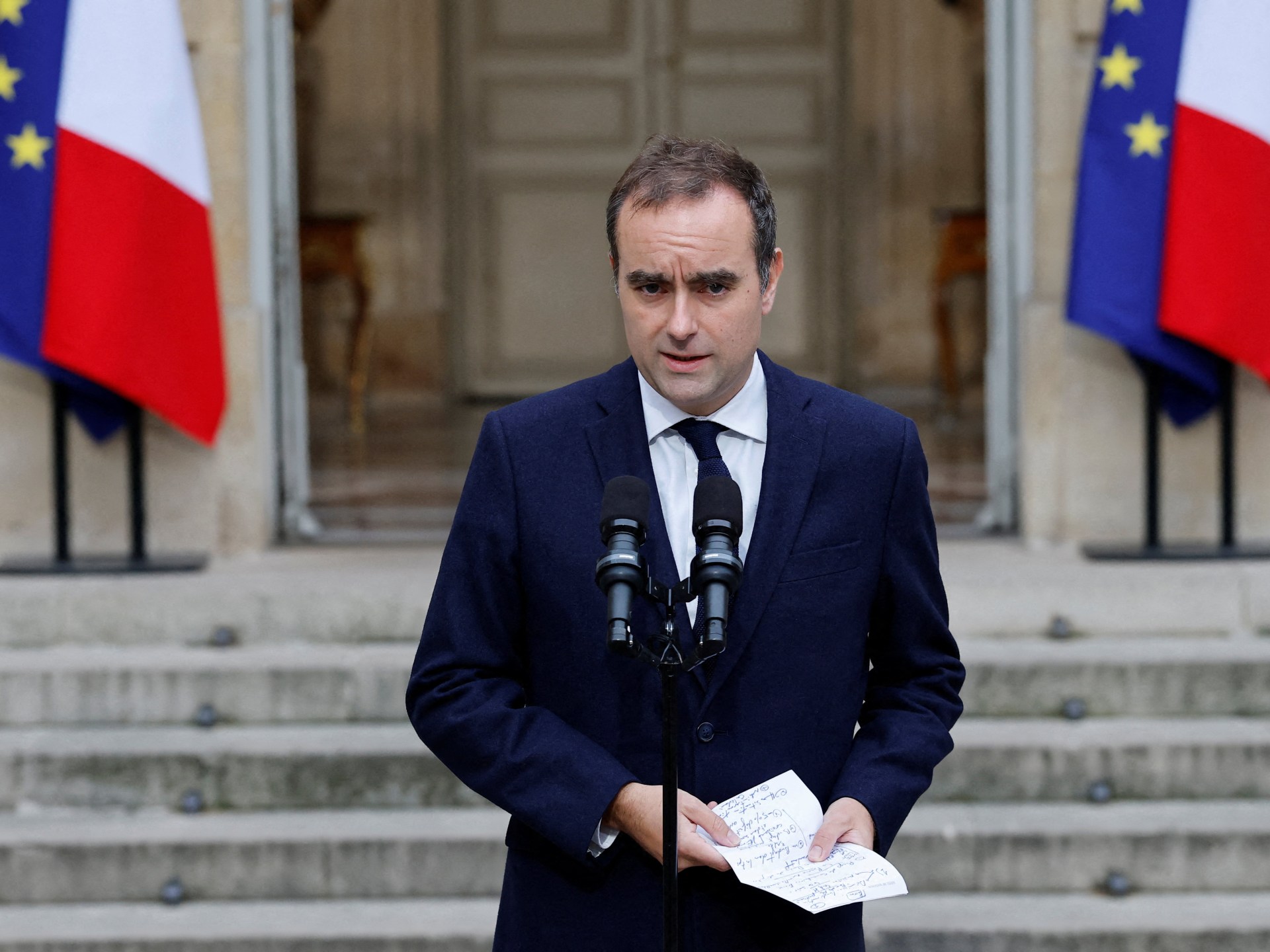

France’s National Assembly is set to vote on a major social security budget bill, in a critical test for the embattled Prime Minister Sebastien Lecornu, who has pledged to deliver the country’s 2026 budget before the end of the year.
Debate on the legislation began on Tuesday afternoon. Lecornu governs without a majority in parliament, and has sought support from the Socialist Party by offering concessions, including suspending President Emmanuel Macron’s controversial pension reform.
- list 1 of 3Bulgarian government pulls budget amid fierce protests
- list 2 of 3EU proposes using Russian assets, loans to fund $105bn package to Ukraine
- list 3 of 3Macron tells Xi that China, France must overcome ‘differences’
end of list
If lawmakers reject the plan, France could face another political crisis and a funding gap estimated at 30 billion euros ($35bn) for its healthcare, pension, and welfare systems.
“This social security budget bill is not perfect, but it is the best possible,” Lecornu wrote on X on Saturday, warning that failure to pass it would threaten social services, public finances, and the role of parliament.
Socialist leader Olivier Faure said on Monday that his party could back the bill after the government agreed to suspend Macron’s 2023 pension reform, which raised the retirement age, until after the 2027 presidential election.
But the far-right National Rally and the hard-left France Unbowed have both signalled their opposition, along with more moderate right-wing parties.
Even government allies, including the centrist Horizons party and conservative Republicans, could abstain or vote against the legislation. They argue that freezing the pension reform and raising taxes to win socialist support undermines earlier commitments.
Advertisement
France, the eurozone’s second-largest economy, has been under pressure to reduce its large budget deficit. But political instability has slowed those efforts since Macron’s snap election last year resulted in a hung parliament.
Lecornu, a close Macron ally, said last week that rejection of the bill would nearly double the expected shortfall from 17 billion to 30 billion euros ($20bn-$35bn), threatening the entire 2026 public spending plan.
Without a deal before year-end, the government may be forced to introduce temporary funding measures.
The government aims to bring the deficit below 5 percent of GDP next year, but its narrow political options have led to repeated clashes over public spending.
Budget disputes have already toppled three governments since last year’s election, including that of former Prime Minister Michel Barnier, who lost a no-confidence vote over his own budget bill.
Related News

Firefighting at Hong Kong blaze ends with deaths over 90, dozens missing

UNSC delegation visits Syria on first trip a year after al-Assad’s fall

Five killed in Kyiv, Rostov as Russia, Ukraine carry out overnight attacks